NDT Inspection

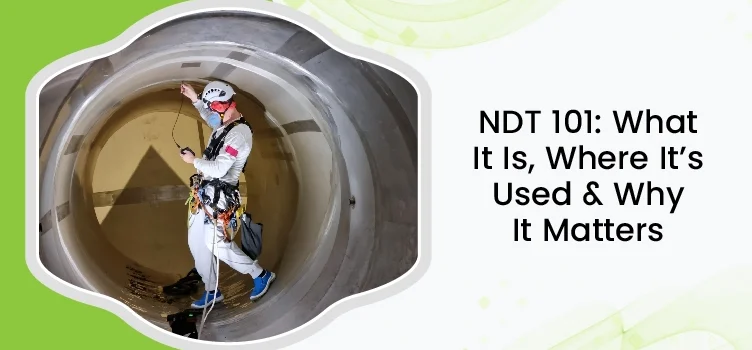
NDT 101: What It Is, Where It’s Used & Why It Matters

For the industries where safety, reliability and performance are of utmost importance, inspection needs to be accurate and non-invasive. This is where Non-Destructive Testing (NDT) comes into play. With it, businesses can determine the condition of materials and structures without causing any damage. It provides industries with insight to help them maintain quality standards without incurring unnecessary failures. 

In this guide, we will explore the basics of NDT, where it is used, why it matters, and much more along the blog. Keep reading!

What Is Non-Destructive Testing?

It is a technique for assessing materials, components or structures without their modification or destruction. This means the tested equipment is able to be used without a problem.

NDT is a process that utilises special techniques to identify surface and internal defects. The most common testing methods are ultrasonic testing, radiographic testing, and magnetic particle testing. These techniques can be used to find cracks, corrosion and inconsistencies.

The main purpose of NDT is to keep things safe, ensure product quality and avoid failures. Industries can carry out precise inspections without compromising productivity with professional solutions provided by Bioscan Ltd.

Ensure safety and reliability with expert NDT solutions from Bioscan Ltd.

Book Inspection Now

Where Is Non-Destructive Testing Used?

The following are the top industries where non-destructive testing is used:

  • Manufacturing: Maintains product quality and eliminates defects in manufacturing
  • Gas Storage: Detects corrosion on pipelines and storage vessels and identifies any leakages
  • Construction: Determines the strength of structures, particularly buildings, bridges, and roads, and evaluates their safety
  • Aerospace: Assures that components used in aircraft are safe to use
  • Food and Agriculture: Provides quality assurance for food and agricultural products
  • Power Plants: Examine boilers, turbines and critical systems

NDT is vital for these industries, helping them avoid failure, meet standards, and run more efficiently. Through the partnership with Bioscan Ltd, businesses can develop and implement efficient inspection systems that enhance safety and performance.

Applications of Non-Destructive Testing 

Non-destructive testing has a wide variety of applications and is very important to industries to ensure safety and efficiency. The following is a listing of some applications of non-destructive testing:

  • Identifying cracks in metal or weld joints.
  • Testing pipelines, tanks, etc., for corrosion.
  • The measure of the thickness of materials for evaluation.
  • A leak detection system for pressurised systems.
  • Stress analysis of industrial equipment

The applications show the importance of NDT for the reliability of various equipment types. Industries can effectively use these applications with Bioscan Ltd.

Advantages of Non-Destructive Testing

Non-destructive testing offers a number of advantages and is commonly employed in several industries.

  • No damage to material: Equipment not damaged and is usable
  • Easy to maintain in the long run: Avoids the high cost of major failures
  • Ensures safe and compliant: Identifies undetected issues at an early stage
  • Real-time results and monitoring: helps make rapid decisions
  • Minimises downtime: Inspections can sometimes be done without stopping the operation

Bioscan Ltd services enable companies to maximise these benefits and enhance their efficiency and safety.

Difference Between Destructive and Non-Destructive Testing

Destructive Testing (DT): Destructive testing is conducted by subjecting a specimen of material to stress until it fails and cannot be used.

Non-Destructive Testing (NDT): Evaluates materials without damaging the component, which can be returned to use.

Key Differences

Destructive Testing (DT) Non-destructive Testing (NDT)
Material Damage DT damages the sample NDT does not
Cost DT will involve the replacement of the tested parts, which is more expensive. NDT will be more cost-effective.
Purpose DT is used for testing performance limits. NDT is used for inspection and maintenance without damaging the specimen.
Reusability No Components tested using NDT can be used.

In industries where operational continuity is the key focus, NDT is highly advised.

What Are the Limitations of NDT?

Although NDT is very effective for businesses with operational continuity, it’s important to know its limitations.

  • Several approaches are shallow or only detect a small amount of information.
  • Needs expert technicians to get precise outcomes
  • Some NDT equipment can be expensive. 
  • Some defects can only be found using multiple methods
  • Interpretation of results may vary

Such restrictions underscore the need to hire an experienced industrial inspection company, such as Bioscan Ltd, to get precise and dependable results.

Why Choose Professional Industrial NDT Inspection Services

Choosing professional industrial NDT inspection services is a wise decision for numerous reasons. Professional inspection services play a crucial role in ensuring accurate results and minimising risks. 

Bioscan Ltd provides complete and versatile industrial NDT inspection solutions that meet industry requirements.

Their services include:

  • Advanced inspection equipment
  • Qualified and experienced engineers
  • Comprehensive and correct reporting.
  • Meeting industry safety requirements

Bioscan Ltd offers businesses the ability to minimise operational risks, improve safety, and guarantee the long-term performance of their equipment.

Detect issues early and avoid costly failures with professional NDT services.

Get a Free Consultation

Conclusion

From safety to efficiency, and from reduced downtime to performance optimisation, NDT plays a crucial role in the operational efficiency of the oil and gas industry. There are some limitations, but the advantages of non-destructive testing are enormous. With an established industrial inspection company like Bioscan Ltd, businesses can ensure that their inspections are accurate, their equipment complies with regulations, and they can rely on it for years and years to come. Contact us now!

FAQs

1. What are the different NDT techniques?

These methods are commonly used: ultrasonic testing, radiographic testing, magnetic particle testing, or visual inspection.

2. How long does it take to get NDT certified?

The certification period will depend on the level and method and is usually between weeks and months.

3. What certification is best for NDT?

Programmes such as ASNT or ISO-based programmes are industry-recognised certifications.

4. How to do NDT testing?

NDT testing involves using specialised tools and trained professionals to inspect materials without causing damage.

5. What are common NDT techniques?

Some of the most popular methods include ultrasonic, radiographic, magnetic particle, and visual testing.

Read More
silo tank inspection

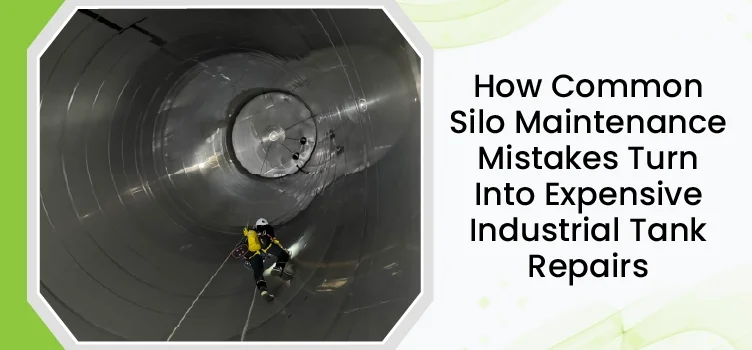
8 Costly Silo Maintenance Mistakes You Must Avoid

While silos are invaluable in industrial operations, their bad condition may cause major structural damage, loss of production, and safety hazards. There are a number of silo maintenance mistakes that many businesses unwittingly make, which cost them money and time. The best way to prevent these problems is to take a proactive stance in preventive silo maintenance and frequent checks. Industries can identify early warning signs with the help of a trusted industrial inspection company and achieve optimal silo performance. 

In this guide, we will focus on some of the most important issues that can arise during maintenance and prevent them from happening.

Common Silo Maintenance Mistakes That Can Lead To Costly Repairs

There are a number of common silo maintenance mistakes that can lead to expensive repairs:

1. Ignoring Preventive Silo Maintenance

Avoiding conducting preventive silo maintenance is one of the major silo maintenance mistakes which can lead to more serious structural issues. Small problems like corrosion or material fatigue can trigger serious structural issues. This results in a gradual decline of silo structure over time and rising repair expenses.

Solution: Use maintenance schedules and periodic inspections by professionals such as Bioscan Ltd for lasting durability.

2. Inadequate Steel Silo Maintenance

Proper silo steel maintenance can avoid the damages caused by moisture, chemicals and inner pressure. If not properly maintained, steel silos can rust, crack and leak, causing a lack of storage security.

Solution: Apply protective coatings and clean on a regular basis; have regular inspections for structural soundness.

3. Skipping Regular Industrial Tank Inspection

Not conducting routine inspections on industrial tanks can mean that things go wrong without you realising it. Damage to the wiring and corrosion or small cracks may not be apparent until an expert assesses the situation.

Solution: Have regular inspections by a trusted industrial inspection company such as Bioscan Ltd to catch problems before they start to affect the business.

Don’t let minor silo issues turn into major failures.

Get Expert Inspection

4. Poor Silo Tank Condition Monitoring

Without the ability to check the condition of the silo tanks at the time intervals, businesses cannot see the issues, like pressure imbalance and material buildups. This can lead to stress and damage of the structure.

Solution: The solution is to utilise automated monitoring systems and data tracking tools to make sure silo conditions are continually assessed.

5. Using Unqualified Maintenance Personnel

One of the major errors that can be made is in hiring untrained or inexperienced workers. The improper repair and lack of signs of danger can worsen silo conditions and risks.

Solution: Trust only the experts, such as Bioscan Ltd, who are trained in industrial tank maintenance and inspection.

6. Delaying Industrial Storage Tank Maintenance

While it may seem convenient to delay industrial storage tank maintenance in order to save money, it will cost more in the future. Small issues can turn into huge structural problems and safety hazards.

Solution: Correct the problem without delaying to save money, lives and structural damage.

7. Improper Cleaning and Material Handling

If the materials are not cleaned properly and handled correctly in storage, residues can build up, become contaminated and block. This has an impact on storage efficiency, as well as on the structure of the silo.

Solution: Clean the system properly and use the right methods for handling materials to keep the system efficient.

8. Neglecting Environmental and External Factors

Weather, temperature fluctuations and the impact of weather and temperature on the environment can all have a significant impact on silo performance. Otherwise, they could lead to cracking, corrosion and stresses in the structure.

Solution: Install protective systems, coatings and routine risk assessments from Bioscan Ltd to protect silos from environmental damage.

Importance of Preventive Maintenance and Monitoring

Preventive maintenance of the silo is much more cost-effective than reactive maintenance. The regular monitoring and inspection can be used to detect the problems in the early stage and may help to reduce the downtime and repair cost.

Effective strategies include:

  • Bulk storage tanks that are used for regular industrial operations require periodic inspection.
  • Predictive maintenance tools in order to detect faults earlier.
  • Structured plans for maintenance of industrial tanks.

Bioscan Ltd, a preventive silo maintenance company, works with businesses to ensure that their equipment has the maximum useful life.

Professional Silo & Tank Inspection Services by Bioscan Ltd

Bioscan Ltd is a leading player in the industrial storage tank inspection and maintenance field, providing full solutions to silo/tank systems. They also happen to be among the best industrial inspection companies, and they have expertise in cutting-edge diagnostics and preventative solutions.

Key Services:

  • Modern technologies to provide advanced industrial tank inspection.
  • Conducts structural integrity checks of silos and storage tanks.
  • Carries out structural integrity checks on silos and storage tanks.
  • Monitoring of the condition of the silo tanks in real-time
  • Silo Maintenance solutions: end-to-end prevention solutions

Benefits:

  • Early detection of structural problems
  • Reduced repair and operational costs
  • Better safety and compliance with regulations.
  • Better safety and adherence to regulations.
  • Longer lifespan of industrial equipment.

Bioscan Ltd boasts extensive knowledge of maintenance in steel silos and industrial storage tank maintenance, which allows for long-term durability and reliable performance of your equipment. Their customised solutions are designed to reduce risks within industries while optimising efficiency.

Ensure safety, performance, and long-term durability today.

Schedule Maintenance Now

Conclusion

To ensure the safety, efficiency and durability of industrial storage systems, it is important to avoid common pitfalls in the maintenance of the silos. By implementing proactive maintenance practices and taking the help of professionals such as Bioscan Ltd, companies can help protect their assets and ensure they are running at their optimum performance. When done at the time of investment, it will lead to long-run reliability and cost savings. Contact us now!

FAQs

1. Can professional silo inspection services extend equipment life?

Absolutely, regular inspections do enable the identification of some early damage to equipment and prevent large-scale failures which can considerably prolong the life of the equipment.

2. How can regular industrial tank maintenance reduce repair costs?

Routine maintenance helps in the early detection of problems, thus saving on repair and downtime expenses.

3. How does NDT help in industrial tank maintenance?

NDT does not cause any damage to the structure and can detect any surface or internal defects, thus ensuring the safety of the structure and accurate inspection.

4. What are signs that an industrial tank needs immediate inspection?

If there are visible cracks, leakage, corrosion, unusual noises or performance problems, it is a sign that there is an urgent need for the inspection.

5. What are the most common steel silo maintenance issues?

There are several issues that frequently arise during steel silo maintenance, such as rust, corrosion, cracks, and weakening of the structure.

Read More
Non-Destructive Testing

Is Non-Destructive Testing Worth It? Pros, Cons & Real Insights

It is very important to ensure the safety and functionality of equipment in modern industries; if not, it can have significant consequences in terms of downtime and failure costs. Industrial non-destructive testing has a key role in this. It enables companies to look at and assess materials without damaging them. However, does it really pay off? Knowing both the pros and cons of non-destructive testing will help you make your decision. 

In this detailed blog post, we will cover the basics of NDT testing, its types in brief, advantages and disadvantages in detail. Keep reading!

What Is Industrial Non-Destructive Testing?

Industrial non-destructive testing is a group of inspection methods which are employed to determine the health of materials, parts or systems without causing any harm. This also leaves the equipment in perfect working order, making NDT extremely efficient in the modern performance-centric industrial world.

NDT uses advanced technologies to identify defects both in and on the surface of a material. These techniques can be used to detect problems such as cracking, corrosion, and weak structures before they turn into major issues. 

These are the most popular techniques:

  • Ultrasonic Testing (UT): Sound waves reflect off any defect and provide information about the location and size of the defect.
  • Radiography Testing (RT): X-rays or gamma rays are used to record properties of internal discontinuities, like a medical scan.
  • Magnetic Particle Testing (MPT): Visible particles are attracted to surface cracks in ferromagnetic materials by a magnetic field.
  • Visual Inspection (VI): Experienced personnel do a visual inspection of accessible surfaces for wear, corrosion, or structural issues.

The main purpose of NDT is to ensure safety and prevent failures. The early detection of defects enables businesses to prevent failures and ensure they stay compliant. Industries can apply efficient inspection strategies with the help of advanced tools and proven inspection methodologies.

Detect issues early and prevent costly failures with expert NDT solutions.

Book Inspection Now

Advantages of Non-Destructive Testing

 Non-destructive testing has the following advantages:

1. No Damage to Materials

The first benefit of non-destructive testing is that it is not destructive. Parts are not damaged and can still operate. This is especially beneficial for critical industrial assets whose downtime can significantly hamper production.

2. Cost-effective in the long run

The benefits of non-destructive testing become evident when you consider what you’re trying to avoid: unplanned downtime, emergency repairs, and catastrophic failures. While there may be initial costs, NDT will avoid large failures that result in costly repairs or replacements. The early detection of problems means that businesses can save a lot on maintenance and downtime costs.

3. Ensures Safety and Compliance

The ability to detect hidden defects that cannot be seen from the outside is one of the advantages of NDT. This guarantees equipment safety and compliance with regulations in the industry. Compliance is more reliable and efficient with Bioscan Ltd, a leading NDT testing service provider.

 4. Minimal Downtime

There are numerous NDT techniques that do not require operations to be shut down. This minimises production losses and helps to maintain uninterrupted production which is essential in industries where uninterrupted production processes are required.

 5. Versatile Across Industries

NDT can be used for all types of equipment and most sectors, such as silo tank, spray dryer systems, cyclones and bag filter systems. This versatility makes it a favoured inspection technique for total industrial maintenance.

Disadvantages of Non-Destructive Testing

1. High Initial Equipment Cost

The drawback of non-destructive testing is the high cost of advanced equipment. Some technologies, such as radiographic and ultrasonic testing, require substantial capital investment and can be beyond the reach of some businesses. That’s why sometimes working with a specialist NDT testing service provider such as Bioscan Ltd is much more cost effective than developing a capability in-house.

2. Requires Skilled Professionals

NDT is a dependable and skill-based approach which requires training and certification of the technicians to ensure reliable results. Often the drawbacks of non-destructive testing will be related to the operator, not the test itself.

3. Limited Detection in Some Cases

A single NDT technique cannot be used to identify all defects. Depending on the method used, some weaknesses can be concealed, and multiple testing methods are necessary to achieve accurate results.

4. Interpretation of Results Can Vary

The results of the NDT might need special interpretation. The misinterpretation may result in wrong conclusions about the condition of the equipment. Bioscan Ltd, a leading NDT company, has highly skilled professionals who minimise these interpretation mistakes to nearly zero due to continuous exposure and the high number of clients served. 

5. Surface Preparation May Be Needed

Some NDT techniques need surface preparation and/or cleaning prior to testing. This increases the time and effort required for inspection and is required for accurate results.

Applications of NDT in Industrial Equipment

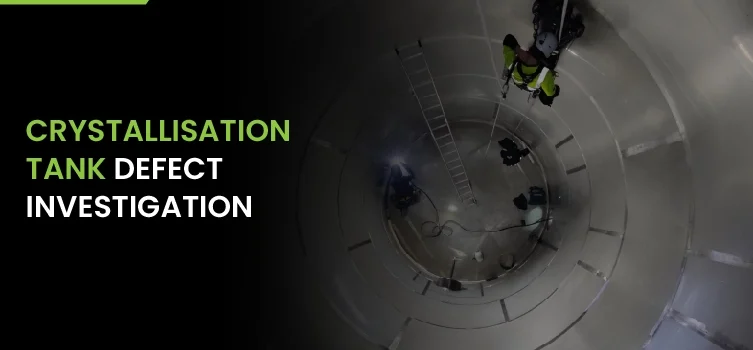
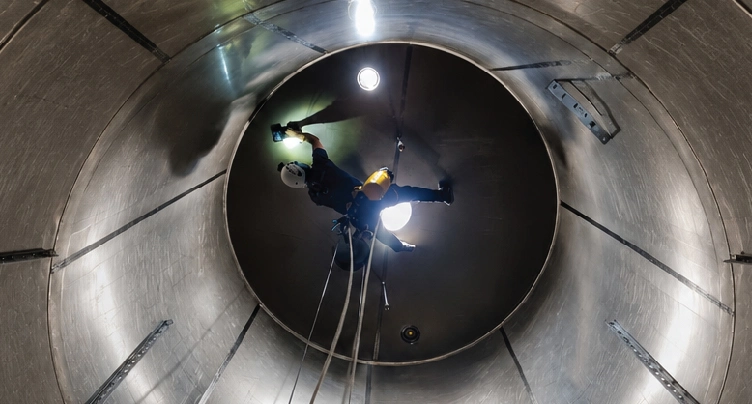
1. Silo Tank Inspection

NDT is often used to inspect silo tanks for cracks, corrosion and structural weaknesses. This contributes to the safety of storage and material loss prevention.

2. Spray Dryer Inspection

NDT can be used to detect wear, heat damage and internal defects in spray dryer systems, which can impact the system’s performance and efficiency.

3. Cyclone and Bag Filter Inspection

Routine cleaning of cyclone and bag filter units is necessary to maintain their ability to filter, identify blockages and avoid operational problems.

4. General Industrial Equipment

In addition to pipelines, pressure vessels, and storage tanks, NDT is applied to a wide variety of other equipment. Through their NDT services, Bioscan Ltd make sure that industries have full reliability and safety of their equipment.

Why Choose Bioscan Ltd as Your NDT Testing Service Provider

Bioscan Ltd is a world-class provider of NDT testing services for industrial equipment, offering full inspection and repair solutions.

Key Services:

  • Inspection and repair of the silo tank
  • Spray dryer inspection
  • Inspection of cyclone and bag filter

Key Benefits:

  • High-technology diagnostic equipment for accurate diagnosis
  • Professionals with years of experience provide correct results.
  • Inspection reports that are reliable and based on data.
  • Excellent emphasis on safety and compliance

Partnering with businesses, Bioscan Ltd provides solutions and expertise to minimise risk, extend equipment life and ensure efficient operations.

Ensure safety and performance with reliable testing from Bioscan Ltd.

Get Expert Consultation

Conclusion

Industrial non-destructive testing is a great investment to help industries maintain safety, minimise downtime, and maximise equipment life. Although there are some disadvantages to non-destructive testing, the advantages are far greater than the disadvantages. Combining the benefits of non-destructive testing, companies can avoid failures and meet compliance standards. 

Partnering with an experienced NDT company like Bioscan Ltd ensures accurate inspections, reliable results, and enhanced operational performance. Select the most appropriate approach and partner. Both are provided by Bioscan Ltd. 

Contact the Bioscan team today to talk about your inspection needs.

FAQs

1. What is Non Destructive Testing (NDT)?

NDT is a way of testing materials and equipment without causing damage, so it will not ruin the material.

2. What are the main advantages of non-destructive testing?

Non-destructive testing offers the following significant benefits: safety, cost savings, no material damage and early detection of defects.

3. Why is non-destructive testing important in industrial inspections?

It can detect hidden defects, make sure it meets requirements and avoid expensive failures in the critical equipment.

4. Which industries commonly use non-destructive testing?

NDT is widely used in industries like manufacturing, construction, oil & gas, processing units, etc.

5. Is non-destructive testing cost-effective?

Yes, although it makes an upfront investment, you will save costs over time due to the lack of big failures and downtime.

Read More