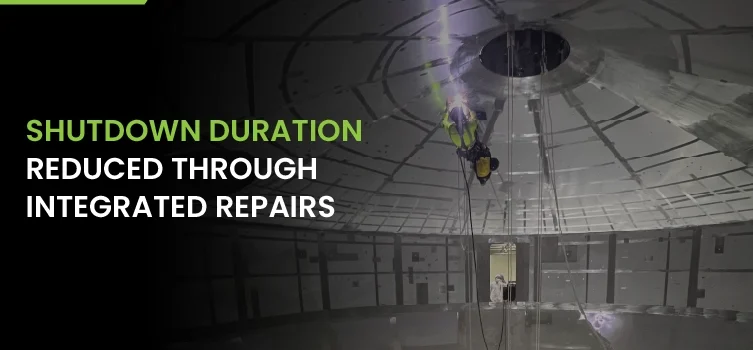
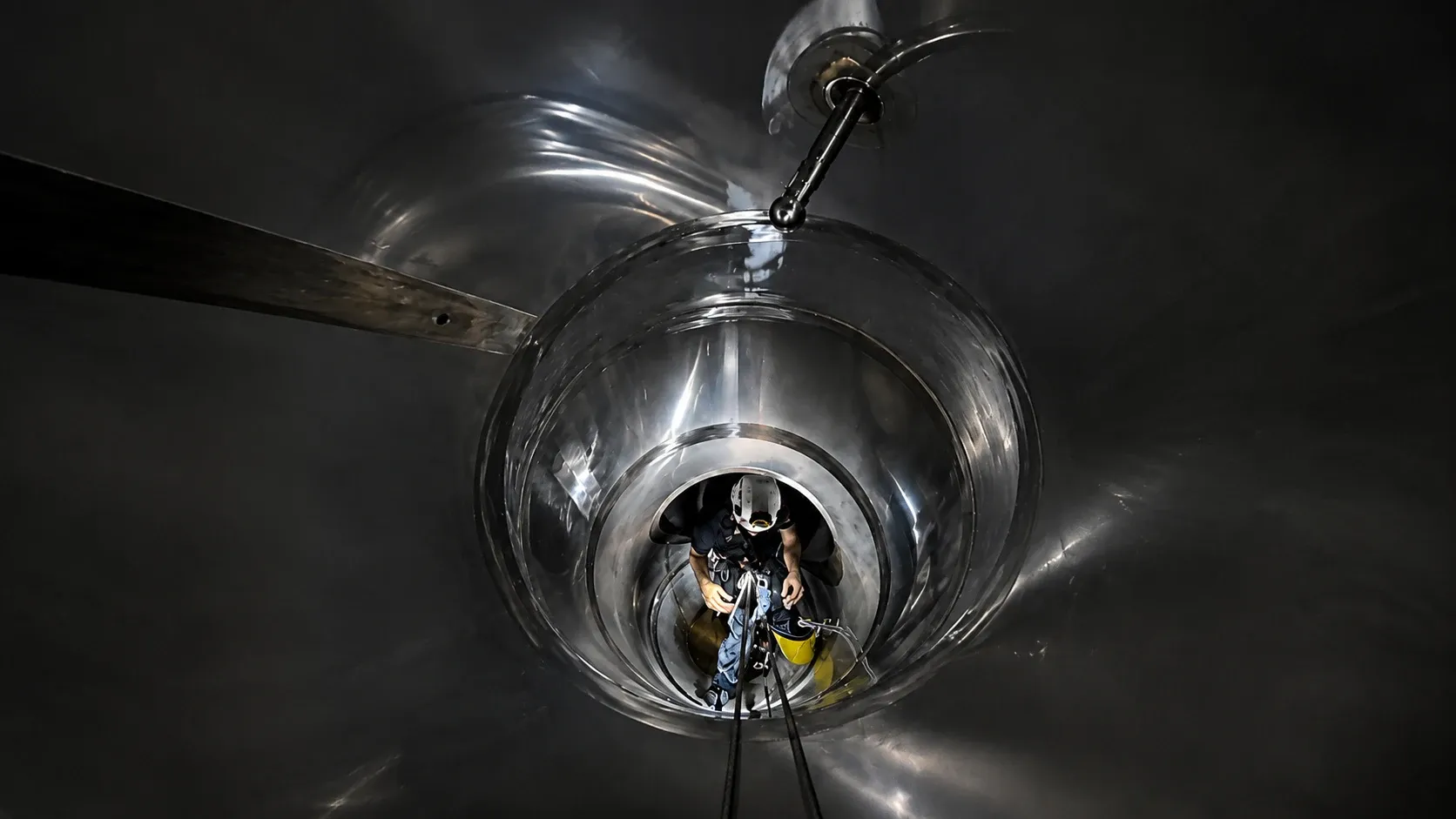
Shutdown Duration Reduced Through Integrated Repairs

Shutdown Duration Reduced Through Integrated Repairs

Context

Every year, this dairy manufacturer entered their annual shutdown with the same setup: one contractor for inspection and another for welding repairs. And every year, the same problems followed. Repair decisions got delayed while findings were communicated across teams. Confined spaces were entered multiple times. Downtime stretched beyond what the production schedule could comfortably absorb.

The inefficiency was not a technical failure. It was a coordination one.

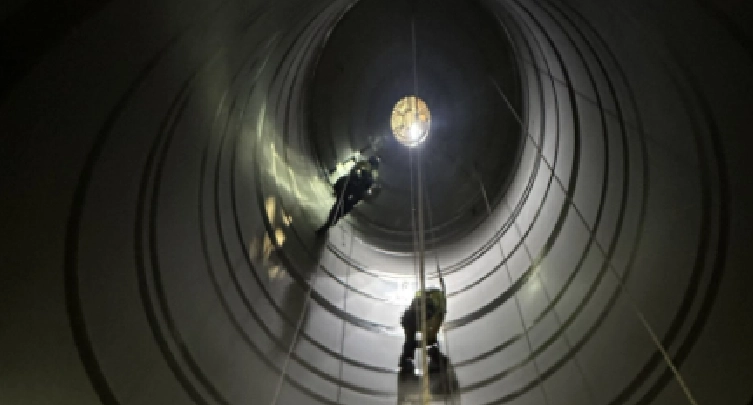
Dairy Plant Equipment Inspection

Challenges

Bioscan was brought in to consolidate the entire process under one team. The scope included a full dairy plant equipment inspection, crack detection across all critical components, on-site repairs, grinding, and hygienic polishing, all within a single shutdown window. No handovers, no waiting, no duplication of access. The pressure was not just technical. Every hour of additional downtime had a direct cost to production output.

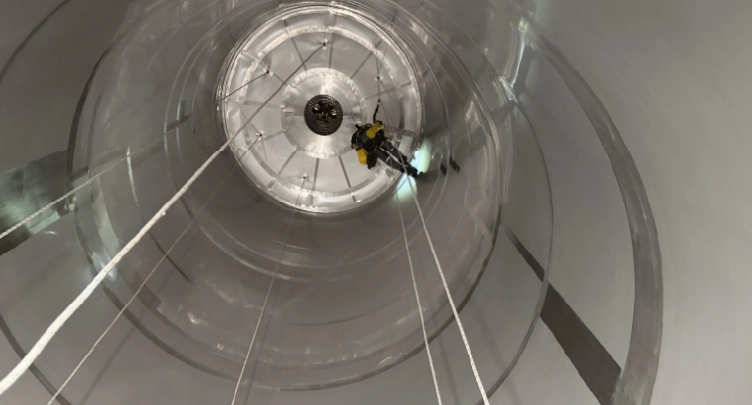
Dairy Processing Equipment Repairs

Reduce your shutdown duration with Bioscan’s integrated inspection and repair programme.

Book an Inspection

The Bioscan Response

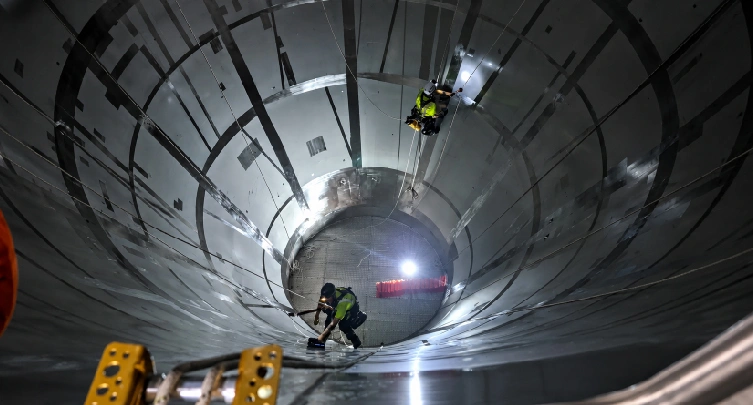
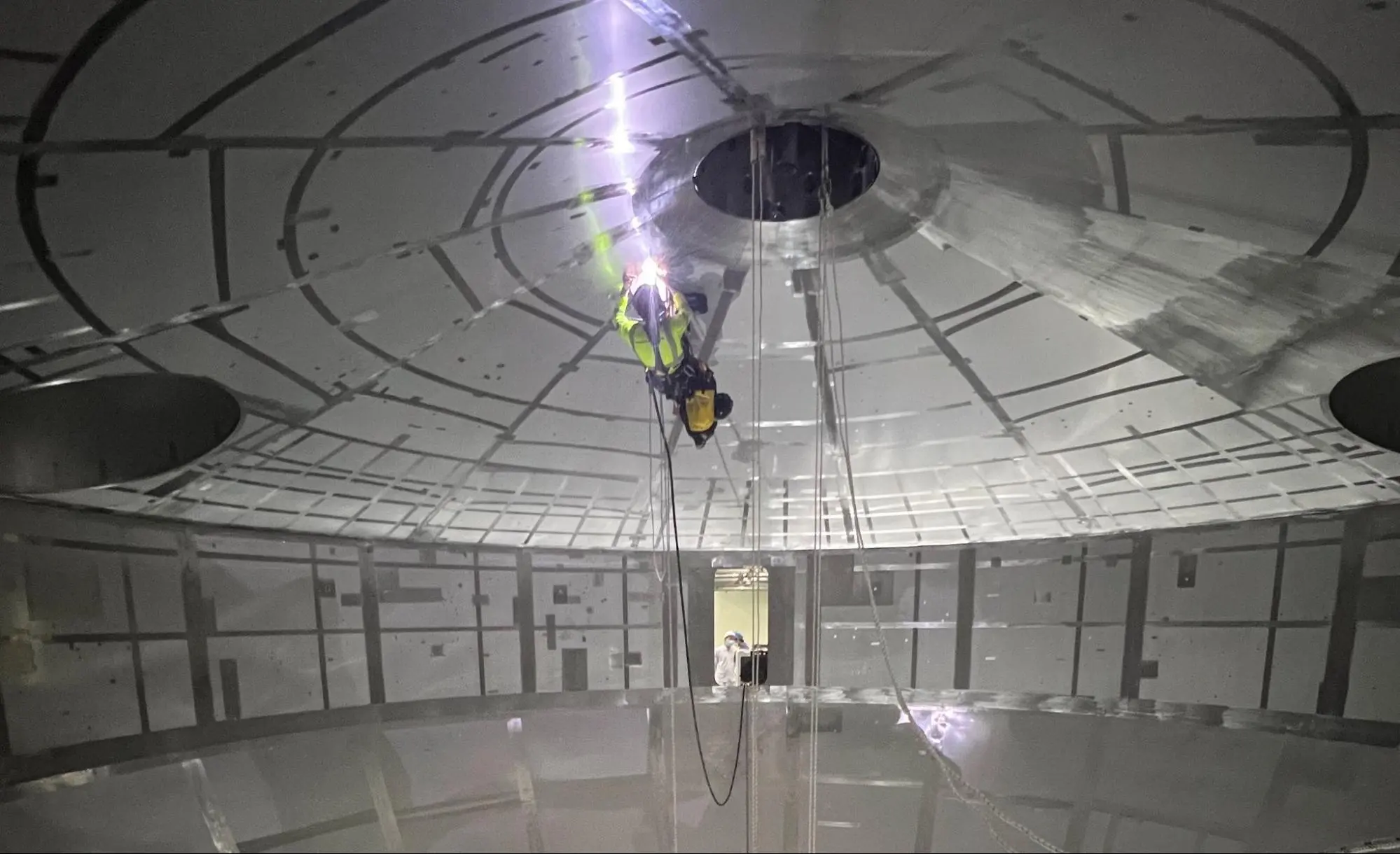
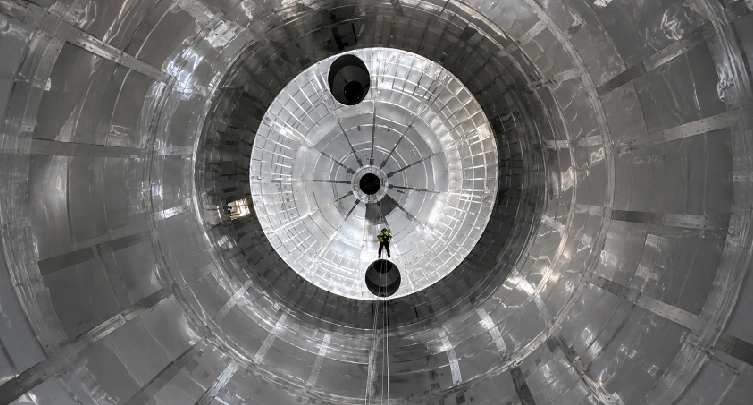
Our industrial spray dryer crack test identified multiple cracks across dryer cones, cyclone transitions, fluid bed welds, and internal ducting. In a fragmented setup, these findings would have triggered a separate mobilisation for repairs. With our integrated team, the same people moved directly from detection to correction.

Food-grade welding, polishing, and verification were completed in sequence without requiring repeat confined-space entry. Our spray dryer inspection process was built to keep the shutdown moving rather than create decision points that stall it. Dairy processing equipment repairs were carried out to full hygienic finish standards, with a final verification pass completed before sign-off.

Industrial Spray Dryer Crack Test

Outcome

Total shutdown duration came down. Contractor coordination ceased to be a variable. The manufacturer restarted production faster and with a clearer picture of asset condition than any previous shutdown had delivered.

Consolidate your inspection and repair process under one specialist team today.

Get in Touch Today

Impact

Most shutdown overruns are not caused by the complexity of the work. They are caused by the gaps between the people doing it. Bioscan’s integrated model removes those gaps entirely, compressing timelines without cutting corners on quality or safety.

If your next planned shutdown is still being built around separate inspection and industrial equipment inspection contractors, there is a more efficient way to approach it. Talk to Bioscan about what an integrated programme could look like for your facility.

Read More
Hidden Corrosion Behind Product Build Up

Hidden Corrosion Behind Product Build-Up

Context

A food ingredient manufacturer had been reporting unexplained product staining and occasional contamination concerns within their bag filter system. Routine cleaning cycles and visual inspections had repeatedly failed to identify the source of the problem, leaving the quality team without a clear answer and the issue continuing to affect production.

The contamination risk was not only a product quality concern. It pointed to a deeper structural issue within the equipment that standard inspection methods were simply not equipped to uncover.

Challenges

We were contracted to carry out a thorough bag filter system inspection covering internal bag filter housings, product-contact welds, duct transitions, and powder accumulation zones. The main issue was finding defects hidden by compacted powder deposits. These defects had been missed during previous cleanings and visual checks.

Bag Filter System Inspection

Uncover hidden defects in your bag filter system with Bioscan’s NDT inspection.

Book an Inspection

The Bioscan Response

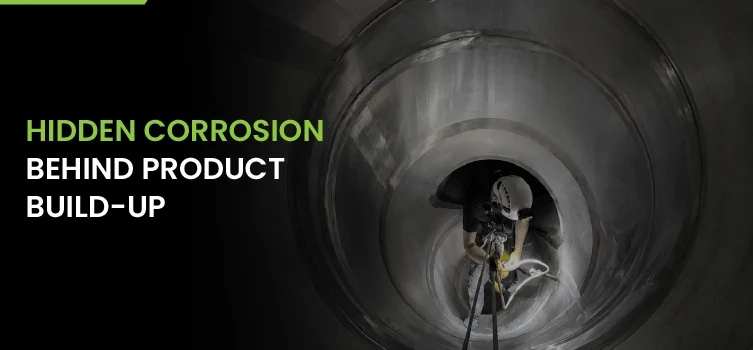
Bioscan mobilised a team to conduct a detailed internal inspection of the bag filter system. Our baghouse filter testing revealed hidden corrosion beneath compacted powder deposits, surface degradation in moisture-prone areas, and localised pitting and cracking across multiple product-contact zones. These were not surface-level issues. The affected areas had created ideal conditions for product retention, bacterial harbourage, and cleaning shadow zones that routine methods could not reach or detect.

As a specialist industrial inspection company, we understand that what is visible during routine checks rarely tells the full story, particularly in powder-handling systems where build-up can conceal significant structural and hygienic risk over time.

After finding issues, we removed damaged materials, fixed the stainless steel parts, and polished the surfaces that touch the product. Once we finished, we did a baghouse integrity test to make sure everything met the hygiene standards. The system then went back online, good as new.


Outcome

After our inspection, we took out all the worn-out materials and fixed the damaged stainless steel parts, then polished the product contact surfaces. We ran a baghouse integrity test afterwards to ensure everything met the needed standards before putting the system back into use.

Baghouse Integrity Test

Protect your food facility from hidden contamination risks with specialist inspections.

Get in Touch Today

Impact

This case shows that food processing problems often stem from issues that visual checks can’t catch. Bioscan’s bag filter inspection helped the manufacturer fix a longstanding problem by giving them clear insights. They were able to take corrective actions, improving their hygiene in the long run.

Your next inspection could uncover what routine checks have been missing. Get in touch with Bioscan to discuss a tailored inspection programme for your facility.

Read More
Infant Formula Facility Risk Reduction Programme

Infant Formula Facility Risk Reduction Programme

Context

A global infant nutrition manufacturer wanted to improve inspection consistency across multiple international spray dryer sites. Historically, each facility had been working with different contractors, reporting formats, and inspection frequencies, making it increasingly difficult to benchmark asset condition or manage hygienic risk in a reliable and uniform way.

The lack of standardisation meant that defect severity was being interpreted differently across locations, and there was no common framework to guide repair prioritisation or track asset health over time. The manufacturer needed a structured, long-term solution.

Bioscan Inspection Case Study Image.

Challenges

We were brought in to design and deliver a unified nutrition manufacturing plant equipment inspection programme that could be applied consistently across all international sites. The scope covered spray dryers, cyclones, bag filters, fluid beds, and ducting systems. Beyond the inspection itself, the programme needed to include standardised defect classification, consistent reporting structures, repair prioritisation guidance, and the ability to track trends across facilities over time.

Standardise equipment inspection across your facilities with Bioscan’s expertise.

Book an Inspection

The Bioscan Response

Bioscan developed a standardised inspection programme and mobilised teams across the manufacturer’s global sites. Initial inspections carried out through industrial spray dryer testing identified significant variation between facilities, including undetected fatigue cracking, inconsistent repair quality, areas of recurring thermal stress, and differing interpretations of defect severity. What had appeared to be a managed asset base was, in reality, carrying a range of unresolved risks that had gone unquantified due to the absence of a unified approach.

Our spray dryer inspection methodology was applied uniformly across all sites, establishing a shared baseline for asset condition assessment. Industrial cyclone testing and bag filter crack testing were carried out as part of the same programme, ensuring full system coverage rather than isolated equipment checks.

We implemented unified inspection methodologies, risk-based repair classifications, global reporting templates, and a long-term defect monitoring framework to support ongoing asset management.

Spray Dryer Crack Testing Case Study


Outcome

The manufacturer gained greater visibility of asset condition across all sites, improved consistency in hygienic risk management, and a more reliable basis for shutdown planning. Confidence in the integrity of their production equipment increased measurably across the organisation.

Build a reliable long-term inspection programme with Bioscan’s specialist team.

Get in Touch Today

Spray Dryer Testing Case Study

Impact

This programme demonstrates the value of a coordinated, standards-driven approach to industrial equipment inspection across multi-site operations. When each facility operates in isolation, risk accumulates silently. Bioscan’s global programme replaced inconsistency with clarity, giving the manufacturer a repeatable, auditable framework for long-term asset integrity and industrial baghouse inspection management.

If you are looking to standardise inspection across your facilities, contact us today.

Read More