spray dryer inspection service

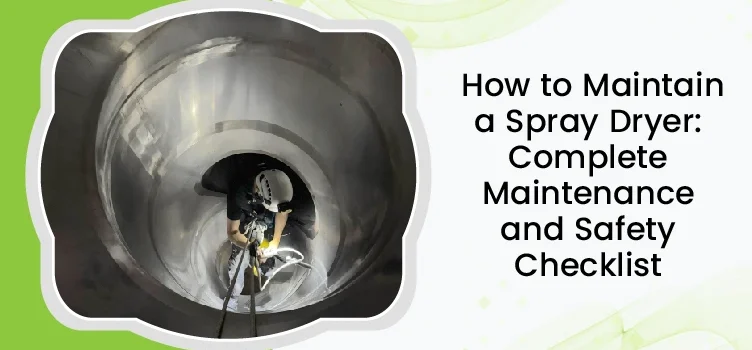
How to Maintain a Spray Dryer: Complete Maintenance and Safety Checklist

A spray dryer is a necessary machine used extensively in the food, pharmaceutical, and chemical industries. Its primary intent is to rapidly and efficiently change liquids into dry powder. To maintain the performance of the dryer, regular maintenance and checks are very important.

This article demonstrates how to care for a spray dryer, warning signs to look for and prevention methods. With the help of Bioscan Ltd, a well-reputed inspection firm, spray dryers can be run safely and efficiently for a long period of time.

Why Spray Dryer Maintenance Matters

A spray dryer is a high-temperature and pressure operated dryer. Over time, parts such as atomisers, ducts and heaters deteriorate or get damaged if proper regular inspections aren’t undertaken. To ensure the safety of the spray dryer from issues, such as fire or heat damage, regular maintenance is needed.

Regular maintenance helps to catch any potential problems early on, ensuring proper airflow, temperature, and safety. A well-organised maintenance programme can ensure better performance and minimise the risk of unexpected shutdowns and ensure consistent production.

Working with industrial inspectors at Bioscan Ltd is also a way for companies to meet safety standards and to avoid unplanned downtime.

Keep your spray dryer operating at peak performance with expert inspection and crack-testing services from Bioscan Ltd.

Book a Spray Dryer Safety Inspection

Maintenance and Checklist of Major Inspection.  

This spray dryer maintenance checklist provides the daily checks, monthly servicing, and yearly safety checks to keep the dryer operating smoothly.  

1. Spray Dryer Maintenance Tips: Daily and Weekly Checks

  • Check the feed pumps, nozzles and atomisers for blockage.  
  • Stability of check inlet and outlet temperatures.  
  • Check the pressure of air in the drying chamber.  
  • Deduct duct and collection unit cleaning.  
  • Hear any strangeness in the noise or the vibrations.

These are the steps that contribute to regular testing, maintenance, and performance checks. 

2. System and Airflow Maintenance Month by Month  

  • Check ducts, seals, gaskets, and other components to detect air leaks.  
  • Filio cleaners and air filters.  
  • Check atomisers for wear.  
  • Temperature and pressure sensor calibration.  

This helps to improve performance and for preventive maintenance.  

3. Inspection of electrical & control systems 

  • PLC systems, alarms and safety locks.  
  • Grounding of checks and electrical insulation.  
  • Check wiring to ensure that it is not damaged.  

These checks help to reduce operational issues.

4. Annual Structural and Safety Inspection 

This ensures that the spray-drying process is safely operated.  

5. Documentation and Review of Compliance

  • Maintain the records of inspection, cleaning and calibration.  
  • Timely industrial inspections by third-party experts.  
  • Track using digital systems  

This aids in meeting the requirements of the ISO and FSSC 22000 standards.  

Standard Wear and Malfunctioning Signs  

One should never overlook any early signs of problems:  

  • Noise or vibration of high intensity can be a sign of fan or bearing problems.  
  • Powder accumulation or discolouration presents itself as a sign of poor drying or airflow.  
  • A change in temperature could be an indicator of sensor or heater issues.  
  • Low quality of powder is associated with damaged parts or air leakage. 

These are typical problem-solving indicators. Bioscan Ltd assists in identifying such a problem at an early stage using high-tech tools.  

Proactive Plans to Improve Productivity  

Planning extends the life and the performance of the dryers:  

  • Adhere to a proper maintenance procedure.  
  • Clean duct and insulation inspection.  
  • Safe lubricants should be used in a food-grade environment.  
  • Conduct vibration testing and electrical testing on a regular basis.  

These steps help in reducing performance failures and increasing overall performance efficiency. 

Safety and Compliance: Securing Processes and People

The workers and equipment are safeguarded by safety checks:  

  • Check alarm and safety systems every few months.  
  • Relief systems of check pressure.  
  • Adhere to confined-space rules.  
  • Check the ladders and access points for rust or cracks.  

Certain safety checks and constant compliance are guaranteed by working with a professional inspection company. Crack inspection of spray dryers performed by Bioscan ensures the system remains defect-free and untouched by downtimes.

Don’t let hidden cracks compromise your plant’s safety. Ensure structural integrity with Bioscan’s advanced electronic testing.

Book an Inspection

Conclusion

It is important to maintain a spray dryer in a clean and well-maintained state to ensure safety, quality of products and continuous operation. Every step counts, whether it is daily cleaning or annual checks. By adhering to correct procedures for cleaning spray dryers, scheduling regular maintenance and partnering with Bioscan Ltd, companies are able to reduce downtime and increase reliability.

A well-founded maintenance plan provides great performance, savings on expenses and safe working conditions.  In this regard, Bioscan Ltd, a reputed industrial inspection company, provides professional industrial inspection services to safeguard and prolong the spray dryers. Contact us now!

FAQs

1. What are the most common issues caused by poor spray dryer maintenance?

Common problems are blocked nozzles, airflow restrictions, temperature instability, corrosion and cracks.  

2. What components need the most attention?

Atomisers, ducts, heaters, fans, sensors, seals, and control panels are the key elements to be checked. 

3. What are the signs that a spray dryer needs maintenance?

Typical symptoms include excessive noise, vibration, powder residue, poor yield and poor quality.

4. Can preventive maintenance reduce spray dryer downtime?

Preventive maintenance for spray dryers is a good way of avoiding sudden failures.

5. Should maintenance be done in-house or by professionals?

While simple tasks can be done in-house, more advanced inspections should be done by experts such as Bioscan Ltd.
Read More
best silo inspection service

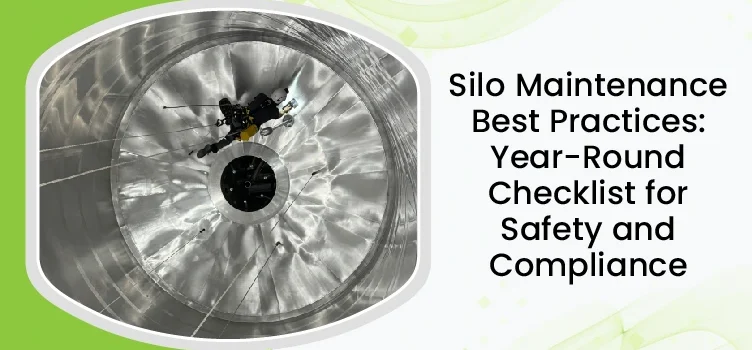
Silo Maintenance Best Practices: Year‑Round Checklist for Safety and Compliance

A silo may look normal from the outside, but its condition changes every single day. Temperature swings, loading cycles, cleaning and weather all place stress on the structure. Without a clear maintenance schedule for the steel silo, small issues can grow into serious safety compliance risks. From good grade storage to industrial bulk handling, regular checks ensure both product quality and the safety of personnel on site. This guide covers silo maintenance best practices that you can follow throughout the year. The fact that professional support and updated inspection equipment keep you safe, in compliance, and productive is also revealed.

Why Routine Silo Maintenance is Important

A silo is not really an idle machine. A silo is constantly vibrating from filling, discharging, and cleaning cycles. Without routine care, silo structural integrity checks will eventually reveal metal fatigue, hidden corrosion, or even wall distortion.

Planned maintenance reduces these risks and supports silo maintenance for safety and compliance. It also helps prevent microbial growth and product residue, especially in food and beverage storage. Meeting food-grade standards, audit demands, and safety certifications is not a one-time event. It requires consistent attention and records. For example, sites storing dairy powders or beverage intermediates must be inspected regularly to avoid biofilm formation, residue buildup, and contamination of future batches.

Download Complete Silo Maintenance Checklist

Get Maintenance Guide

Core Silo Inspection & Maintenance Checklist

Year‑round industrial silo maintenance works best with a clear checklist. Here are the core areas that should be part of any annual silo maintenance checklist and routine walkdowns.

1. Structural integrity and exterior

Start from the outer envelope. Check the envelope for any denting, cracking, or shifting of the indicating points. Observe if there are any gaps between the bottom of the envelope and the supporting surface, indicating improper load distribution or settlement. Regular silo structural inspection helps confirm that the shell and supports are performing as designed.

2. Corrosion and coating review

Inspect paint and coatings for blisters, peeling, or rust spots. These often mark the starting points of more serious damage. Preventing corrosion in storage silos includes repairing damaged coatings quickly and targeting areas that trap moisture or product dust.

3. Seals, vents, and fittings

Examine the gaskets, inspection hatches, vents, and process connections of the manways. Leaks, moisture, or material losses may result if seals become damaged or worn. Vent filters and relief valves must be clean, unobstructed, or else operated in a potentially dangerous manner.

4. Internal safety and hygiene

When it is safe to do so, examine the inside surfaces for accumulation, residue, or mould. Cleaning steps should be tied to your silo maintenance best practices and product risk. Smooth, residue‑free surfaces help maintain hygiene and consistent flow.

5. Electrical, sensor, and control systems

Check level sensors, temperature probes, pressure switches, and alarms. Faulty instruments can hide temperature spikes or product spoilage. Reliable monitoring is part of silo maintenance for safety and compliance.

6. Access and safety equipment

Ladders, platforms, handrails, anchors, and fall protection points need to be secure and free from corrosion. Good access can be a factor in carrying out maintenance or inspections, as in rope access work, for instance, in BioScan’s IRATA-approved tank and silo inspections and repairs.

7. Inspection documentation

Keeping records for inspection activities is imperative; hence, all observations should be documented, and images and activities should be recorded. Good documentation supports audits and helps answer how often to inspect a silo for your site. It also shows trends over time. Professional electronic inspections, such as BioScan’s Silo Crack Testing and Inspection, use non‑invasive crack detection to locate hidden defects early while reducing downtime and chemical exposure.

Common Warning Signs of Neglect

Early warning signs of poor silo maintenance for safety and compliance are often subtle. However, they signal bigger structural or hygiene risks. Rust streaks, blistered paint, or discoloured spots might suggest initial corrosion beneath the coating. If ignored, this can spread and weaken the steel shell. Moisture spots or regular consideration around seams or nozzles often point to failed insulation or air seal leaks.

Problems with opening and closing manways may indicate a problem with internal pressure, wrapped panels, or distorted frames. Inconsistencies in temperature between batches or hot or cold spots could be related to sensor malfunctions or inadequate ventilation. Atypical vibrations, rattling, or humming noises could indicate loose connections, wall movement, or foundation settlement. Failure to address these warning signs can result in fatigue failures, leaks, and contamination events that cause production downtime and costly repairs.

Optimal Strategies for Preventive Maintenance

Appropriate silo maintenance protocols start with a recorded plan. Link your maintenance schedule for the steel silo to production and cleaning cycles, so inspection and servicing happen at sensible times. For steel units, silo corrosion prevention includes using protective paint and coating systems that match the stored material, such as food‑grade epoxies for sensitive products.

Following deep cleaning, NDT or electronic inspection can verify that seams and welds are free from cracks. It is also essential to revalidate the coating, safety anchorage, and access systems at least once a year as part of the structural integrity checks of silos. By integrating good housekeeping practices, controlled cleaning procedures, and modern inspection methods, it is possible to ensure high levels of hygiene. In addition, it is possible to ensure the safety of workers and enhance the structural life of silos and storage equipment.

For a more in-depth look at the value of continuous inspection, you can also look at the relevance of silo and tank inspections and case studies like BioScan’s 100KL storage tank inspection and repair.

Ensure Silo Safety & Compliance Year-Round

Schedule Inspection

Conclusion

It is not only about completing an audit every now and then. It is about regular maintenance and care. By doing so, you will be able to minimise downtime and ensure smooth production. It will also help you protect your employees. Having an annual silo maintenance checklist, in addition to regular professional inspections, will help you stay on top of corrosion, structural integrity, and cleanliness. If you are ever in question, having a silo structural inspection and industrial inspection service will ensure that small problems are caught before they become major issues.

FAQs

1. What are the most common signs a silo needs maintenance?

Typical signs include visible rust, peeling paint, damp patches, product buildup, sticking hatches, odd noises, or changing product quality. These symptoms suggest it is time to review silo structural integrity checks and update your annual silo maintenance checklist.

2. What should be included in a monthly silo maintenance checklist?

A basic monthly list should cover exterior walk‑around checks, visible corrosion, seal and vent condition, safety ladder and platform condition, and simple sensor tests. Over time, this supports silo maintenance for safety and compliance between formal inspections.

3. How does the weather affect silo maintenance needs?

Rain, frost, and strong sunlight all affect coatings, seals, and foundations. Coastal or damp locations may need more frequent silo corrosion prevention measures. Seasonal changes can influence how often to inspect a silo, especially for exposed outdoor units.

4. Should the interior of the silo be inspected?

Yes. Interior checks are essential for hygiene, flow, and wall condition. Internal silo structural inspection helps find corrosion, residue, or cracks that cannot be seen from the outside. Always follow confined‑space and safety procedures or use specialist access teams.

5. When should professional silo inspections be considered?

Bring in experts when you see structural changes, repeated leaks, unusual vibration, or when storing high‑risk or food‑grade products. Professional industrial inspection services and Silo Crack Testing and Inspection are also recommended on a regular cycle as part of planned preventive maintenance.

Read More
spray dryer inspection service by Bioscan

Spray Dryer Inspection Guide: Checklists You Shouldn’t Ignore

What if your spray dryer suddenly goes down mid-batch? This will result in expensive products wasted and production stopped for hours or even days. Invisible wear builds up rapidly across every surface due to 200°C high-heat chambers, powerful fans that move thousands of cubic metres of air, and atomisation that happens constantly. Without proper checks, the nozzles clog with dried residue, the chambers corrode due to acidic vapours, and airflow fails again; a reliable machine becomes a safety hazard, either with explosion risks or contamination of the product.

That’s why the inspection of spray-drying equipment isn’t something that can be overlooked. A regular maintenance scheme for spray dryers catches these problems at an early stage, boosting efficiency by 15-20%, ensuring product quality to specification, and preventing expensive breakdowns costing thousands of dollars per hour. Regular industrial spray dryer inspection keeps your operation smooth, safe, and profitable. Let’s explore exactly what professional inspectors check to keep your system running reliably.

The Importance of Regular Spray Dryer Inspection for Safety and Performance

Spray dryers face extreme daily stress, which requires professional checks.

  • Harsh Operating Conditions: High temperatures, strong airflow, and continuous movement of particles wear down nozzles, chambers, and cyclones.
  • Hidden Dangers Grow Fast: Without regular testing and routine inspection, micro-cracks, coating failures, and clogs turn into major issues in spray dryer operations, resulting in dust explosions, loss of efficiency, or even prolonged downtime.
  • DIY Checks Miss Critical Faults: Internal corrosion, nozzle misalignment, and airflow are just a few of the problems that remain invisible without ultrasonic gauges, borescopes, and vibration analysers for spray-drying process safety.
  • Industry Standards Demand Structure: Plans for routine maintenance for spray dryers in food, pharma, and chemical plants should be certified to meet strict quality rules.
  • Smart Inspection Schedule: Annual spray dryer performance testing, plus regular visuals, with the addition of extra safety checks post-heavy runs, shutdowns, or failed spray dryer cleaning process cycles, ensures reliable spray dryer performance check results..

Get Comprehensive Spray Dryer Inspection with Expert Checklists

Schedule Inspection

What Inspectors Check: Full Spray Dryer Inspection Checklist

Professional industrial spray dryer inspection services follow a complete checklist. Each of the systems is tested for safety, performance, hygiene, and energy efficiency:

1. Air Inlet and Filtration System

Inspectors check intake filters, pre-filters, and final units for tears or excessive pressure drop. The results of dirty filters are product contamination, spiked energy costs, and uneven drying. Clean airflow is absolutely important in carrying out stable spray dryer performance testing.

2. Atomisation System / Nozzles

Nozzles and atomisers are the most important parts of a spray dryer. Wear patterns, blockages due to crystallised feed, spray pattern distortion, and hydraulic leaks are checked by the scientists. Poor atomisation produces uneven droplets that might result in wet walls, stickiness and product quality problems.

3. Drying Chamber Examination

The chamber faces the most severe conditions with acidic vapours. Inspectors look for corrosion pitting, warping from thermal stress, powder buildup, and weld fatigue cracks. They also check manways, viewports, and internal lighting for easy access during the spray dryer cleaning process.

4. Cyclone Separator & Bag Filter Check

Liner tears, pulse-jet damage, poor gasket seals, and powder buildup that reduce efficiency are looked at again in cyclones and bag filters. Again, this affects recovery rates of powder, emissions compliance, and spray dryer safety checks: damaged filters waste product and create combustible dust hazards.

5. Exhaust System & Air Flow Path

The ductwork, fans, and dampers are checked for leaks in flex joints, undue vibration, and air flow balance. Adequate exhaust flow prevents operational problems of the spray dryer, such as recirculation, while maintaining the evaporation efficiency.

6. Heat Exchanger & Energy Efficiency Assessment

The heat exchanger is subjected to tube scaling, fouling layers, and corrosion that reduce the transfer of heat. In the case of a spray dryer performance check, cleanliness of the surfaces means stable inlet temperatures and lower energy bills.

7. Spray Dryer Components & Joints

Flanges, expansion joints, access doors, and structural spray dryer components are checked for leaks by means of ultrasonic detection and gasket tightness. Worn seals lead to dust escaping and, at the same time, create opportunities for cross-contamination.

8. Instrumentation and Control System Audit

Sensors, gauges, and PLC controls ensure accuracy through calibration. Reliable instrumentation provides support for safe spray dryer maintenance to avoid overheated shutdowns during consistent production.

9. Structural and External Inspection

The outer shell, platforms, ladders, and insulation are checked for corrosion under insulation, cracks, and thermal bridging. This provides long-term safety for the spray-drying process, and cold spots are avoided.

10. Final Operational Run Test

A live production run confirms that everything works together under load. Inspectors monitor startup sequences, steady-state operation, and controlled shutdown for smooth testing of the spray dryer performance without alarms.

Common Operational Problems Found During Inspections

Industrial inspection service in spray dryers reveals periodic spray dryer operational problems. Condensation of moisture, acidic vapours, and/or alkaline feed chemicals causes internal corrosion attacks on chamber walls, cyclones, and fluid-contact parts. Such an attack weakens the metal and thus increases the contamination risks.

Poor atomisation, non-uniform droplets, and wall wetting of the chamber result from nozzles that are blocked. Airflow imbalances lead to hot and cold spots, which hurt drying efficiency. In addition, the buildup of powder in ducts and chambers can provoke problems regarding hygiene and even risks of explosion.

It wastes powder, releases dust into the environment, and raises energy costs. Regular inspection of spray-drying equipment, combined with spray-dryer troubleshooting, can catch these faults early to protect safety and performance.

Why You Need Professional Spray Dryer Maintenance & Repair Services

Of course, the certified spray dryer maintenance experts do much more than just check a few simple things. They deliver preventive maintenance for spray dryers with precision nozzle realignment, component replacement using OEM parts, dynamic fan balancing, and seal upgrades. Advanced diagnostics like vibration analysis, thermography, and airflow mapping predict failures before they stop production.

Specialist weld repairs, corrosion protection, chamber polishing, and gasket renewal will ensure that full performance is restored. Specialist spray dryer safety checks will focus on compliance and meet food, pharma, and chemical industry standards. Structured service plans minimise downtime while optimising spray dryer troubleshooting and keeping the cost of regular maintenance within budget.

Avoid Costly Downtime, Protect Your Spray Dryer Operations Now

Contact BioScan Today

Conclusion

A proper routine maintenance plan for spray dryers starts with comprehensive inspections following certified protocols. Regular inspection of spray-drying equipment avoids major breakdowns, protects product quality, and ensures safety during the spray-drying process. Do not wait until operational issues occur with your spray dryer. Contact us at Bioscan Ltd to schedule professional spray dryer performance testing today with our certified professionals.

FAQs

1. What are the main techniques used in spray dryer testing?

Visual inspections, ultrasonic thickness testing, airflow measurement, particle size analysis, and moisture content checks form the core. Advanced methods like NDT, thermography, and vibration analysis detect hidden spray dryer operational issues for complete performance testing.​

2. How often should spray dryer testing be conducted?

Yearly comprehensive routine inspection suits most operations, with monthly visual checks and quarterly performance audits. Hygiene-critical plants need more frequent regular testing after shutdowns, recipe changes, or heavy spray dryer cleaning process cycles.​

3. What are the benefits of employing advanced diagnostics (like NDT, thermography, and vibration analysis) in spray dryer testing?

These tools reveal internal corrosion, airflow imbalances, and mechanical wear before failure. They enable predictive spray dryer troubleshooting, cut unplanned downtime by over half, improve energy efficiency, and boost product yield during spray dryer maintenance.​

4. In what industries is spray dryer testing particularly critical?

Food, dairy, pharmaceuticals, nutraceuticals, and fine chemicals demand rigorous spray-drying process safety and hygiene. Strict GMP, FDA, and ATEX rules make regular industrial spray dryer inspection essential to prevent contamination and ensure spray dryer safety checks.

5. How can the findings from a spray dryer test be used to optimise operations?

Test results guide nozzle adjustments, temperature tweaks, and airflow balancing. Data improves yield, reduces energy costs, prioritises preventive maintenance for spray dryers, and refines recipes for consistent spray dryer performance checks and product quality.

Read More