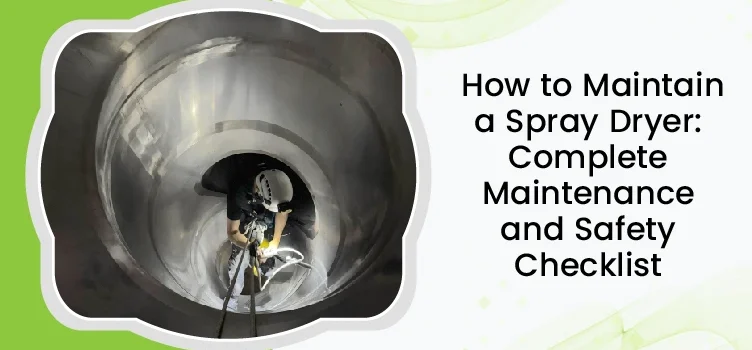
spray dryer inspection service by Bioscan

Spray Dryer Inspection Guide: Checklists You Shouldn’t Ignore

What if your spray dryer suddenly goes down mid-batch? This will result in expensive products wasted and production stopped for hours or even days. Invisible wear builds up rapidly across every surface due to 200°C high-heat chambers, powerful fans that move thousands of cubic metres of air, and atomisation that happens constantly. Without proper checks, the nozzles clog with dried residue, the chambers corrode due to acidic vapours, and airflow fails again; a reliable machine becomes a safety hazard, either with explosion risks or contamination of the product.

That’s why the inspection of spray-drying equipment isn’t something that can be overlooked. A regular maintenance scheme for spray dryers catches these problems at an early stage, boosting efficiency by 15-20%, ensuring product quality to specification, and preventing expensive breakdowns costing thousands of dollars per hour. Regular industrial spray dryer inspection keeps your operation smooth, safe, and profitable. Let’s explore exactly what professional inspectors check to keep your system running reliably.

The Importance of Regular Spray Dryer Inspection for Safety and Performance

Spray dryers face extreme daily stress, which requires professional checks.

  • Harsh Operating Conditions: High temperatures, strong airflow, and continuous movement of particles wear down nozzles, chambers, and cyclones.
  • Hidden Dangers Grow Fast: Without regular testing and routine inspection, micro-cracks, coating failures, and clogs turn into major issues in spray dryer operations, resulting in dust explosions, loss of efficiency, or even prolonged downtime.
  • DIY Checks Miss Critical Faults: Internal corrosion, nozzle misalignment, and airflow are just a few of the problems that remain invisible without ultrasonic gauges, borescopes, and vibration analysers for spray-drying process safety.
  • Industry Standards Demand Structure: Plans for routine maintenance for spray dryers in food, pharma, and chemical plants should be certified to meet strict quality rules.
  • Smart Inspection Schedule: Annual spray dryer performance testing, plus regular visuals, with the addition of extra safety checks post-heavy runs, shutdowns, or failed spray dryer cleaning process cycles, ensures reliable spray dryer performance check results..

Get Comprehensive Spray Dryer Inspection with Expert Checklists

Schedule Inspection

What Inspectors Check: Full Spray Dryer Inspection Checklist

Professional industrial spray dryer inspection services follow a complete checklist. Each of the systems is tested for safety, performance, hygiene, and energy efficiency:

1. Air Inlet and Filtration System

Inspectors check intake filters, pre-filters, and final units for tears or excessive pressure drop. The results of dirty filters are product contamination, spiked energy costs, and uneven drying. Clean airflow is absolutely important in carrying out stable spray dryer performance testing.

2. Atomisation System / Nozzles

Nozzles and atomisers are the most important parts of a spray dryer. Wear patterns, blockages due to crystallised feed, spray pattern distortion, and hydraulic leaks are checked by the scientists. Poor atomisation produces uneven droplets that might result in wet walls, stickiness and product quality problems.

3. Drying Chamber Examination

The chamber faces the most severe conditions with acidic vapours. Inspectors look for corrosion pitting, warping from thermal stress, powder buildup, and weld fatigue cracks. They also check manways, viewports, and internal lighting for easy access during the spray dryer cleaning process.

4. Cyclone Separator & Bag Filter Check

Liner tears, pulse-jet damage, poor gasket seals, and powder buildup that reduce efficiency are looked at again in cyclones and bag filters. Again, this affects recovery rates of powder, emissions compliance, and spray dryer safety checks: damaged filters waste product and create combustible dust hazards.

5. Exhaust System & Air Flow Path

The ductwork, fans, and dampers are checked for leaks in flex joints, undue vibration, and air flow balance. Adequate exhaust flow prevents operational problems of the spray dryer, such as recirculation, while maintaining the evaporation efficiency.

6. Heat Exchanger & Energy Efficiency Assessment

The heat exchanger is subjected to tube scaling, fouling layers, and corrosion that reduce the transfer of heat. In the case of a spray dryer performance check, cleanliness of the surfaces means stable inlet temperatures and lower energy bills.

7. Spray Dryer Components & Joints

Flanges, expansion joints, access doors, and structural spray dryer components are checked for leaks by means of ultrasonic detection and gasket tightness. Worn seals lead to dust escaping and, at the same time, create opportunities for cross-contamination.

8. Instrumentation and Control System Audit

Sensors, gauges, and PLC controls ensure accuracy through calibration. Reliable instrumentation provides support for safe spray dryer maintenance to avoid overheated shutdowns during consistent production.

9. Structural and External Inspection

The outer shell, platforms, ladders, and insulation are checked for corrosion under insulation, cracks, and thermal bridging. This provides long-term safety for the spray-drying process, and cold spots are avoided.

10. Final Operational Run Test

A live production run confirms that everything works together under load. Inspectors monitor startup sequences, steady-state operation, and controlled shutdown for smooth testing of the spray dryer performance without alarms.

Common Operational Problems Found During Inspections

Industrial inspection service in spray dryers reveals periodic spray dryer operational problems. Condensation of moisture, acidic vapours, and/or alkaline feed chemicals causes internal corrosion attacks on chamber walls, cyclones, and fluid-contact parts. Such an attack weakens the metal and thus increases the contamination risks.

Poor atomisation, non-uniform droplets, and wall wetting of the chamber result from nozzles that are blocked. Airflow imbalances lead to hot and cold spots, which hurt drying efficiency. In addition, the buildup of powder in ducts and chambers can provoke problems regarding hygiene and even risks of explosion.

It wastes powder, releases dust into the environment, and raises energy costs. Regular inspection of spray-drying equipment, combined with spray-dryer troubleshooting, can catch these faults early to protect safety and performance.

Why You Need Professional Spray Dryer Maintenance & Repair Services

Of course, the certified spray dryer maintenance experts do much more than just check a few simple things. They deliver preventive maintenance for spray dryers with precision nozzle realignment, component replacement using OEM parts, dynamic fan balancing, and seal upgrades. Advanced diagnostics like vibration analysis, thermography, and airflow mapping predict failures before they stop production.

Specialist weld repairs, corrosion protection, chamber polishing, and gasket renewal will ensure that full performance is restored. Specialist spray dryer safety checks will focus on compliance and meet food, pharma, and chemical industry standards. Structured service plans minimise downtime while optimising spray dryer troubleshooting and keeping the cost of regular maintenance within budget.

Avoid Costly Downtime, Protect Your Spray Dryer Operations Now

Contact BioScan Today

Conclusion

A proper routine maintenance plan for spray dryers starts with comprehensive inspections following certified protocols. Regular inspection of spray-drying equipment avoids major breakdowns, protects product quality, and ensures safety during the spray-drying process. Do not wait until operational issues occur with your spray dryer. Contact us at Bioscan Ltd to schedule professional spray dryer performance testing today with our certified professionals.

FAQs

1. What are the main techniques used in spray dryer testing?

Visual inspections, ultrasonic thickness testing, airflow measurement, particle size analysis, and moisture content checks form the core. Advanced methods like NDT, thermography, and vibration analysis detect hidden spray dryer operational issues for complete performance testing.​

2. How often should spray dryer testing be conducted?

Yearly comprehensive routine inspection suits most operations, with monthly visual checks and quarterly performance audits. Hygiene-critical plants need more frequent regular testing after shutdowns, recipe changes, or heavy spray dryer cleaning process cycles.​

3. What are the benefits of employing advanced diagnostics (like NDT, thermography, and vibration analysis) in spray dryer testing?

These tools reveal internal corrosion, airflow imbalances, and mechanical wear before failure. They enable predictive spray dryer troubleshooting, cut unplanned downtime by over half, improve energy efficiency, and boost product yield during spray dryer maintenance.​

4. In what industries is spray dryer testing particularly critical?

Food, dairy, pharmaceuticals, nutraceuticals, and fine chemicals demand rigorous spray-drying process safety and hygiene. Strict GMP, FDA, and ATEX rules make regular industrial spray dryer inspection essential to prevent contamination and ensure spray dryer safety checks.

5. How can the findings from a spray dryer test be used to optimise operations?

Test results guide nozzle adjustments, temperature tweaks, and airflow balancing. Data improves yield, reduces energy costs, prioritises preventive maintenance for spray dryers, and refines recipes for consistent spray dryer performance checks and product quality.

Read More
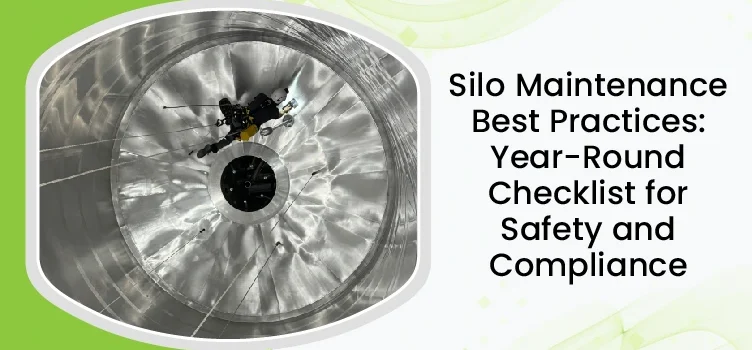
silo tank inspection service by Bioscan

What Do Inspectors Look for During a Silo Inspection? A Guide

When did your silo last get a good inspection? Most plants don’t think about it until a minor issue becomes a major problem. Silos quietly work behind the scenes day in and day out, with heavy loads and temperature swings causing constant changes in pressure. Given time, these stresses progressively weaken the structure, and cracks, leaks, or corrosion materialise deep within the steel walls.

That is just why regular silo inspections are so important. Professional inspection helps to spot these early signs of wear before they affect safety, product quality, or performance. Scheduled silo maintenance not only protects your structure but also reduces costly breakdowns, improves safety, and ensures that your operations continue without disruption.

Why Professional Silo Inspection Is Critical for Safety & Longevity

A silo operates under continuous stress; it has to bear the continuous pressure, temperature variation, and motion of materials, which, over time, will affect its strength. If left uninspected, latent cracks, corrosion, or weak joints may appear. These defects reduce the load-carrying capacity and may result in sudden failure or expensive contamination.

Professional inspection means each portion of the silo is checked with specialised tools. Inspectors use electronic tests and thickness gauges that find hidden corrosion or wall thinning that may not be visible from the outside. These internal issues are poorly identified in a mere visual check or by any non-professional means. That is why hiring the services of experienced inspectors is important.

For stainless-steel silos, experts recommend an annual silo safety check. Additional inspections should be undertaken in excess of this frequency after very heavy usage, violent storms, or pressure surges. Professional inspectors examine the welds, joints, and coatings. They also measure wall thicknesses and test the structures for resistance to pressure. These steps reduce risks and ensure long-term silo servicing performance.

Ensure Safe, Reliable Silo Performance with Professional Inspection

Schedule Silo Inspection

What Inspectors Check: Full Silo Inspection Checklist

A detailed silo inspection covers every part of the structure from top to bottom; each section must work properly for the silo to remain safe and stable. What inspectors usually check includes:

1. Silo Roof Inspection

The inspection of a silo roof is focused on cracks, leaks, rust, and seal integrity. The roof is the usual first part to show visible damage due to direct exposure to all types of weather. Other things that are inspected include missing bolts, corroded joints, or loose fittings of vents, access hatches, and safety rails to ensure all components are secure. A well-maintained roof prevents water from infiltrating the silo and spoiling the product.

2. Silo Wall Inspection

The experts, during a silo wall inspection, check for surface cracks, corrosion, rust patches, or even bulging. Since the walls bear most of the internal load, any weakness here is serious. Inspectors will test wall thickness with digital gauges to be certain that the structure can withstand the pressure of material stored within. Distortion can be caused by uneven pressure or poor maintenance; therefore, balancing the loads and periodic checks are two other main keys to silo safety.

3. Silo Foundation Inspection

The inspection of the silo foundation ensures that the whole structure stands firm. Inspectors check for any settlement cracks or tilting at its base. Sometimes, soil movement or water around the foundation causes instability. Any misalignment and small gap between the silo and the ground may indicate stress in the foundation. Prevention of this early will avoid dangerous collapses and uneven distributions of loads.

4. Silo Cone Inspection

The bottom section of the silo cone is the target area where material flows through to the discharge system. This part has to face high friction and abrasion from the flow of moving materials. Inspectors check for wall thinning, cracks, or corrosion in the cone and welded joints. Any structural weakness here blocks product flow or causes leaks. Regular checks help maintain smooth discharge and reduce stress on the lower shell.

5. Silo Discharge System Inspection

Inspectors will generally check valves, chutes, and feeders during a silo discharge system inspection. They check if those parts open and close accordingly without leakage or blockage. These components also suffer damage that might allow product contamination or create some mechanical strain. They also verify whether the material flow is even and if discharge performance is affected by any vibration or mechanical issue.

6. Interior Inspection

A silo interior inspection helps in the detection of hidden buildup, residue, and corrosion. Inspectors use cameras or drones to see inside tight areas safely. They check coating condition, detect peeling, and look for buildup that affects flow. Smooth internal surfaces help materials move without sticking, reducing blockages and uneven load pressure. Clean interiors also prevent contamination between storage cycles.

7. Exterior Inspection

A silo exterior inspection involves anything visible from the outside. They search for rust, dents, cracks, or coating damage. They check ladders, platforms, and beams for corrosion and loose connections. Exterior wear is often a symptom of internal issues. Eliminating exterior problems helps stop larger, more serious structural issues from developing.

Common Issues Identified in Silo Inspections

Professional inspectors identify potential issues that are not visible upon casual observation. The most common problem is internal corrosion due to humidity or reactive material inside the silo, which deteriorates the steel over time. Cracks or distortions of walls due to uneven pressure inside the silo or neglected maintenance are another common serious issue.

Leaks in the roofs or walls let in moisture, leading to contamination and the loss of product. Material building up inside silos can block flow, placing uneven stress on the walls. In some instances, this even causes settling of the soil, with the risk of base instability threatening the whole structure. Roof beams may bend or fail after extended overload. Regular professional inspections catch these issues before they force shutdowns.

Why You Need a Professional Silo Tank Repair Company

The safest way of restoring or strengthening a damaged silo is by using an accredited silo tank repair company. The repair specialists are trained in certified methods of structural reinforcement, sealing, and corrosion treatment. Advanced coatings, modern welding processes, and surface restoration will be employed to stop further damage.

These professionals also provide predictive maintenance programmes based on inspection reports. They assist in planning the future silo maintenance schedules to avoid the same problems occurring again and again. Regular servicing decreases downtime, prevents costly rebuilds, and ensures compliance with safety regulations.

Working with an experienced industrial inspection company means that your steel silos will remain in good condition. A trustworthy repair partner helps in sustaining performance over time while meeting all industry inspection criteria.

Protect Your Plant from Unexpected Silo Failures and Costly Shutdowns

Talk to BioScan Experts

Conclusion

A safe silo starts with a proper inspection plan. Scheduled professional inspections by a certified silo tank repair company help you detect cracks, corrosion, leaks, and distortion before they give you serious trouble. Such routine checks further extend the life of your steel silos and help to maintain smooth functioning. You get reliable silo servicing and restoration from trusted experts like BioScan, protecting your investment and encouraging safer working conditions. To set up an inspection or to discuss any silo maintenance needs you might have, contact BioScan today. Our team will assure you of safe and efficient silos.

FAQs

1. What does a professional silo inspection look like?

A professional inspection includes a detailed review of the roof, walls, foundation, cone, and discharge system. Inspectors use electronic tools and thickness gauges to spot corrosion, cracks, and leaks before they cause serious structural problems.

2. What kinds of problems are most commonly found in silos during inspection?

Common issues include corrosion, cracks, leakage, and wall thinning from pressure or moisture. Inspectors also find material buildup and blockages that create uneven loads, stressing the silo walls and risking long-term damage or product contamination.

3. What are the benefits of choosing a specialist silo inspection company like BioScan?

A specialist like BioScan offers complete silo servicing, accurate testing, and expert silo maintenance. Their inspections meet strict safety standards and help prevent costly breakdowns. Learn more about their tank inspection services.

4. Can older silos have special issues?

Yes. Older silos face more corrosion, weakened welds, and coating failures. They often develop hidden structural damage over time, so frequent professional inspections are crucial to maintain safety, prevent leaks, and extend their lifespan.

Read More
Robotic Visual Inspections Missed 50+ Cracks — Feature Image 01

Robotic Visual Inspections Missed 50+ Cracks — Bioscan Found Them in One Visit

Overview

A multi-national dairy manufacturer relied on a robotic visual inspections for 3 consecutive years. Each inspection reported zero cracks inside the spray dryer, and the equipment was considered conformed.

In 2024, after hygiene deviations and rising micro counts, the manufacturer requested a full inspection from Bioscan using it’s advanced electronic crack detection. Bioscan identified more than 50 cracks and defects in a single visit.

Robotic Visual Inspections (Years 1–3)

  • HD visual robotic camera
  • Limited access in complex geometries
  • Limitied detection capability for micro-cracks or weld fatigue
  • 0 defects reported each year

Bioscan Inspection (Year 4)

  • Electromagnetic crack detection
  • Access platform and rope-access methods ensuring full surface coverage
  • 50+ cracks discovered, including:
    • Weld cracks
    • Fatigue cracks
    • HAZ cracking
    • Through-wall defects
    • High-risk cracks near nozzles, bustle, duct transitions

Get Your Spray dryer Inspection Done Right

Get in Touch

Impact on the Client

1. Major Unplanned Shutdown

The extent of damage required a two-week emergency shutdown, halting production immediately.

2. Direct Financial Costs

  • $200,000 – welding repairs, polishing, labour and specialist access
  • $950,000 – production losses from unplanned downtime
  • Total: $1,150,000 impact from issues that went undetected for three years

3. Contamination and Compliance Risk

Because cracks had been present for multiple years, the site faced:

  • Hidden microbial harbourage
  • Reduced cleaning effectiveness
  • Compromised hygiene during audits
  • Increased product quality risk

The visual inspection “all clear” created a false sense of security.

Resized Image

Root Cause of Missed Defects

  • Robot could not access or illuminate critical weld zones
  • Surface glare and product residue concealed cracks
  • Technology limited to visual inspection — no crack detection
  • No detection of early-stage or sub-surface defects

Outcome

  • Dryer restored to full hygienic condition after repair
  • Structural integrity re-established
  • Robotic inspections discontinued
  • Bioscan adopted as the annual inspection standard across the site

Get Your Spray dryer Inspection Done Right

Get in Touch

Conclusion

This case highlights the risks of relying solely on robotic visual inspection. Over 50 cracks developed undetected, resulting in:

  • Serious food-safety exposure
  • A two-week shutdown
  • $1,150,000 in unexpected costs

Bioscan’s technology provided the accuracy and depth needed to prevent future failures and
protect production integrity.

Read More