en
 fr
 es
 de

How to Safely Perform Inspection Work at Heights
Working at height is often commonly associated with occupational injuries and in worst cases mortality. The risks of working at height include falling, loss of balance, lack of training, and an unsteady or fragile working platform.
Various inspection work in the food and beverage industry such as spray dryer inspections, silo & tanks inspections, and in other industries such as wind turbine inspections, require accessing elevated locations. Implementing effective safety measures for minimising the risk is paramount for avoiding accidents and fatalities.
It is important to understand the risks associated with these inspection works and implement corrective risk management measures.
A] Understanding The Hazards Of Working At Heights
Structures at an elevated height can have many defaults and defects due to negligence. Consequently, workers perform inspection works such as structural inspections, safety inspections of equipment, bridges and platforms, powerline inspection and visual inspections.
Common hazards and risks involved with inspection work at heights:
- Incorrect setting up of the ladder.
- Loss of balance by placing too much weight on the ladder.
- Not checking the protective gear before climbing.
- Lack of training, familiarity and experience on the part of the inspection worker.
- Fragile platforms, bridges and roofs.
- Bad weather conditions.
These risks should be avoided with proper equipment, safety protocols and control measures for working at height, to reduce the chances of injuries and accidents.
B] Key Control Measures for Working at Height Safety
1. Importance Of Risk Assessment And Planning
Conducting a thorough risk assessment to identify potential hazards when working at height can significantly reduce the risk of injuries and mishaps. The inspection process should be well-planned in advance and supervised by professionals. The person conducting an inspection should be trained and experienced. A permit-to-work system can help ensure a formal authorization of the work.
2. Protective Equipment For Working At Heights
Proper protective equipment for working at height is essential for avoiding injuries in case of an unfortunate event. Personal protective equipment (PPE), hard hats, safety glasses, non-slip protective footwear and gloves are the basic safety requirements. Additionally, fall prevention systems such as safety nets, working platforms and harnesses and lanyards are crucial for ensuring safety.
3. Training And Competence Requirements For Workers
An untrained and inexperienced worker may engage in unsafe work practices during the inspection process, raising the accident risks. With a lack of awareness about safety practices, the worker may not use the safety equipment properly, or at all.
4. Emergency Procedures And Rescue Planning
By having an emergency procedure and rescue planning in place, organisations can ensure the safety of the employee. Having clear communication systems and an emergency evacuation plan can help the worker get out of a risky situation. It is important to have an experienced supervisor who can help the worker get down safely if something goes wrong.
5. Safety Culture And Communication On-Site
For any inspection work, the emphasis should be on the worker’s safety. The organisation should focus on safety training, equipment education and hazard recognition. Organisations should make workers aware of various risks and encourage workers to report them to the supervisor so proper repairs can be made.
6. Regular Equipment Inspections And Maintenance
It is important to regularly check and maintain the climbing equipment for ensuring safe working height. The supervisor should test the locks, ropes, connectors and also the platform. The equipment should meet the safety guidelines and be of excellent quality.
Ensure safety & reliability with Bioscan’s precise crack testing inspections!
C] Mitigating Risks And Hazards In Inspection Work
Inspection workers in charge of performing the task are at the highest risk of injury. First and foremost, the worker must be trained to identify potentially hazardous environments and take proper control measures to correct them.
Control measures for specific hazards in inspection work at heights:
- Ensure working platforms are correctly assembled.
- Plan for evacuation and rescue during emergency situations.
- The worker should be trained, experienced and competent.
- Ensure a safety team is on hand for rescue operations
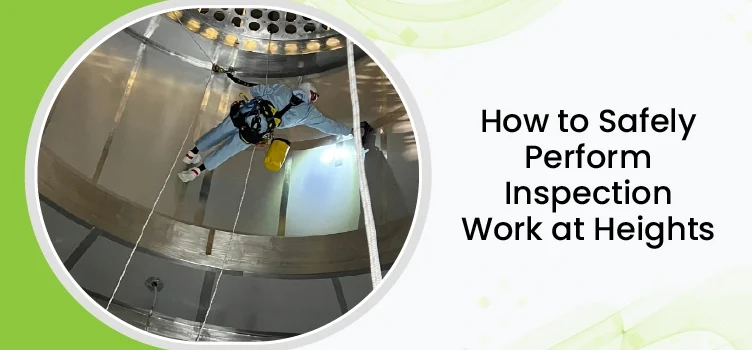
Proper use of an access gantry can ensure a safe crack testing inspection of spray dryers. To learn more about crack testing and inspection, refer to Bioscan’s spray dryer inspections service page.
D] Industrial Rope Access: A Safe Method For Working At Heights
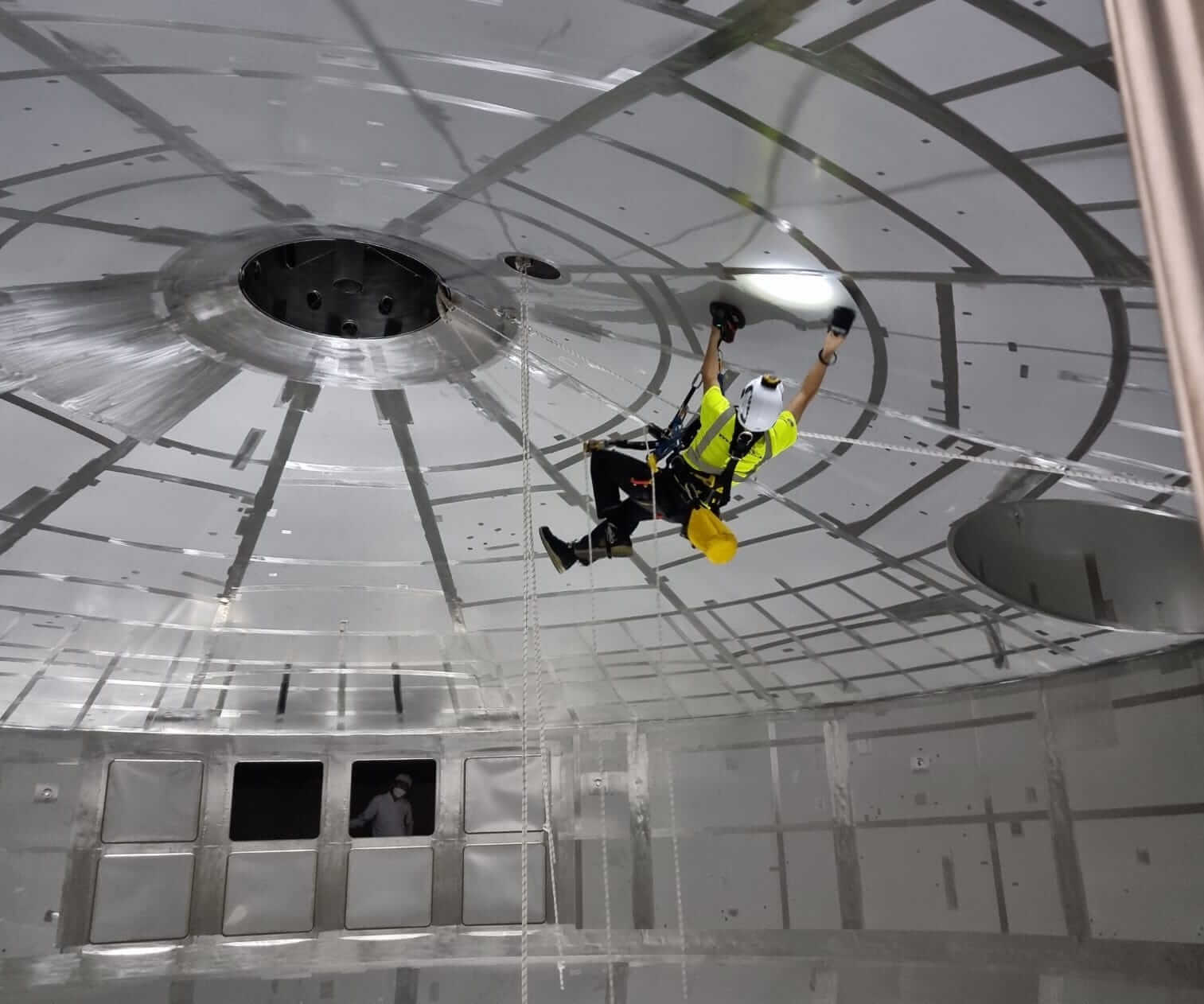
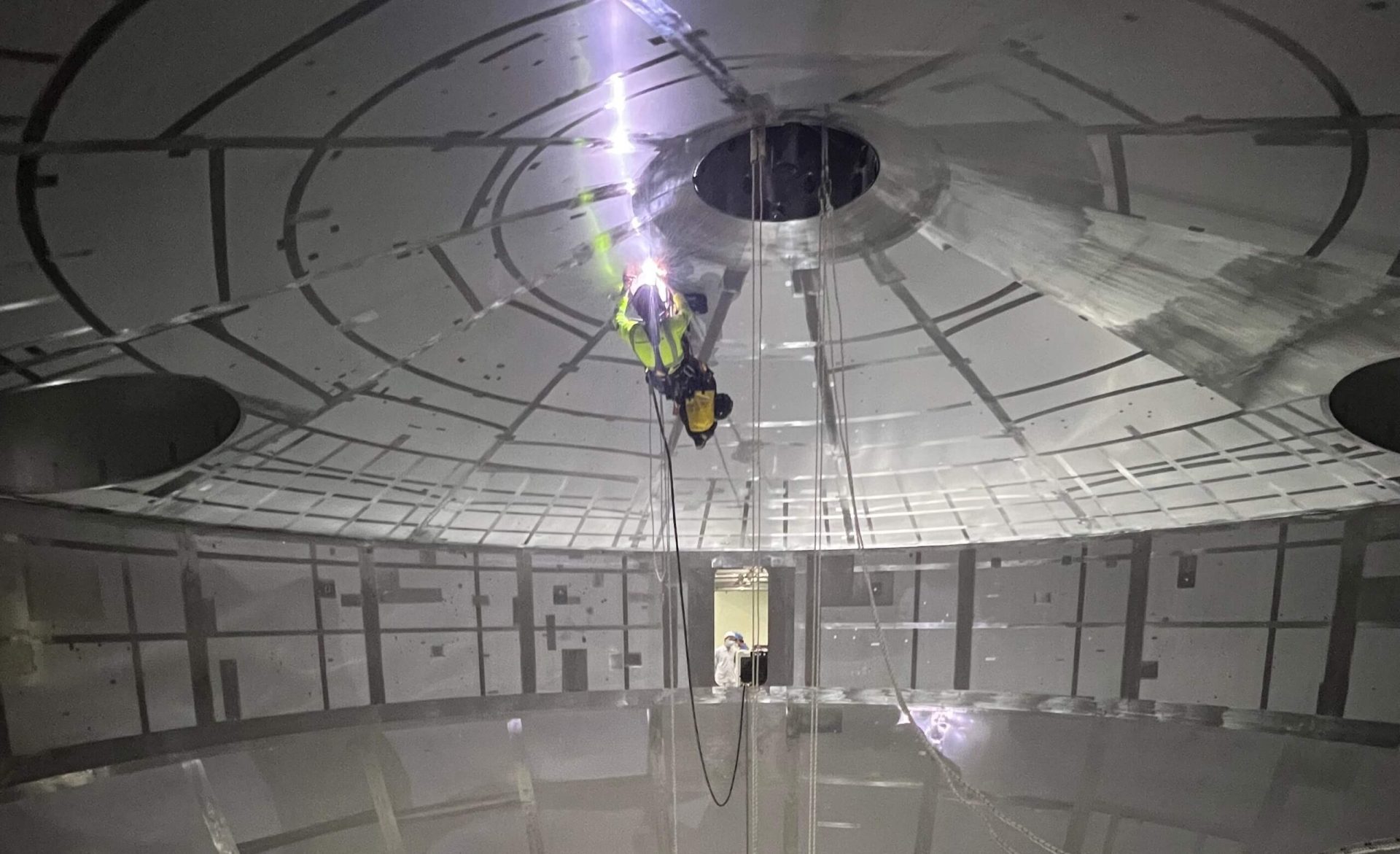
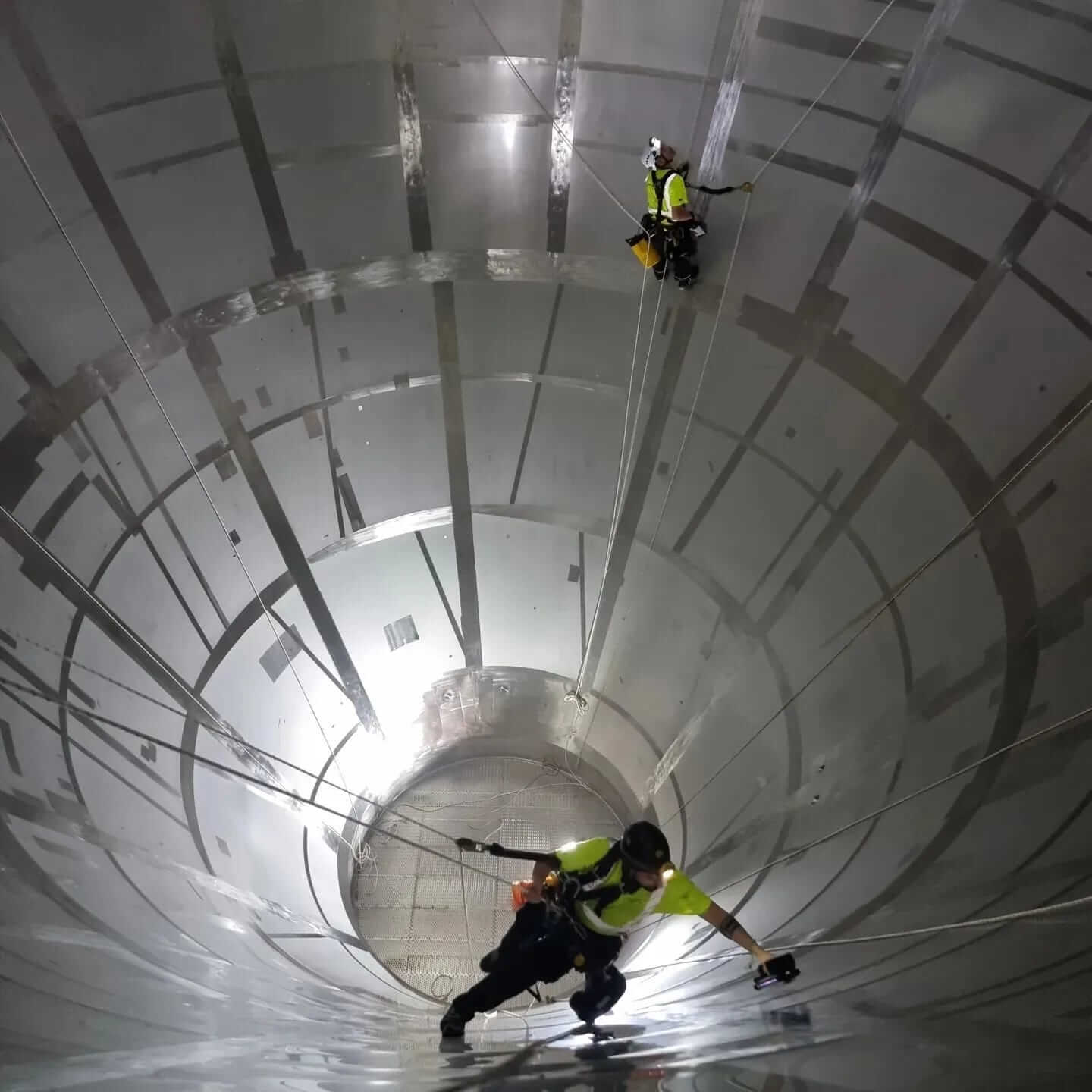
One of the safest methods of working at heights is IRATA International’s rope access system. It uses ropes and other related equipment to gain access to the inspection level. Rope access methods offer many benefits over scaffolding methods, such as cost-efficiency, time-saving and most importantly increased safety.
Bioscan uses high-quality equipment to ensure safety of the rope access technicians. This equipment includes certified harnesses, ropes, descenders, ascenders, connectors, anchor devices, helmets, and safety glasses.
Ensuring Safety in Rope Access Work:
- Training and certification for rope access technicians: The rope technicians must be well-trained, certified and competent.
- Supervision and monitoring during rope access operations: Having a supervisor keeping an eye on the technician and guiding them through the inspection process.
- Quality assurance and equipment inspection: The equipment should be regularly inspected and maintained well.
Further Read: Gas Detection to Enter Confined Spaces Safely
Conclusion
Working at height poses many risks when using inadequate equipment, untrained and incompetent personnel. Organisations can avoid accidents and ensure safety by providing appropriate training, well-maintained equipment, and expert supervision.
Experience accurate and reliable crack testing inspections of your spray dryers, silos and other process vessels, all performed safely at height by Bioscan! Discover the difference Bioscan brings to your operations. Contact us today and unlock the full potential of Bioscan for your business needs.