Introduction To Spray Drying

Introduction To Spray Drying And Crack Testing Inspection Of Spray Dryers

Spray drying is the most widely used manufacturing process for particle formation and drying within the food and pharmaceutical industries. The earliest application of spray drying was to develop skimmed milk powder in the early 20th century.

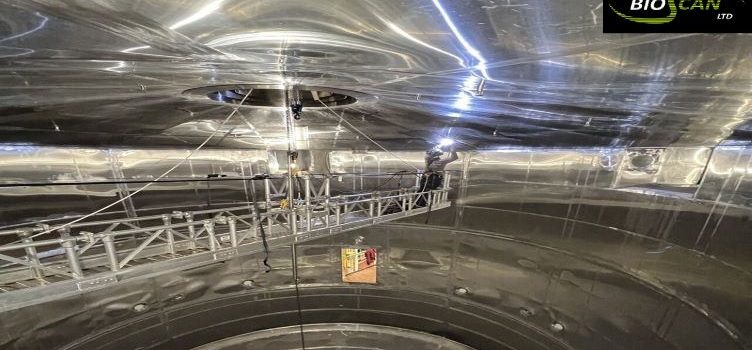
It is utilised to produce dry solids in powder, granulate and agglomerate form from liquids. Spray drying involves atomizing a liquid into a spray of droplets and exposing the droplets to hot air in a dry chamber. The drying process, which involves the evaporation of moisture and the formation of dry particles, is meticulously monitored under stringent temperature and airflow conditions. The powder is then continuously discharged from the spray dryer and packed.

Currently, the importance of spray drying is increasing at an unprecedented rate globally. North America and Europe are the most prominent users of spray drying; however, increasing research and development and the continuous introduction of government initiatives will probably make Brazil, China, India, and Russia dominant players in spray drying in food and pharma.

Spray Dryer Crack Testing Inspections

Spray dryer crack testing inspections encompass Good Manufacturing Practices (GMP). It is essential to note that GMP, HACCP programs, and pathogen monitoring are vital for effective food safety programs. Timely inspection and examination of the spray drying chamber comply with the latest guidelines, legislation, and directives.

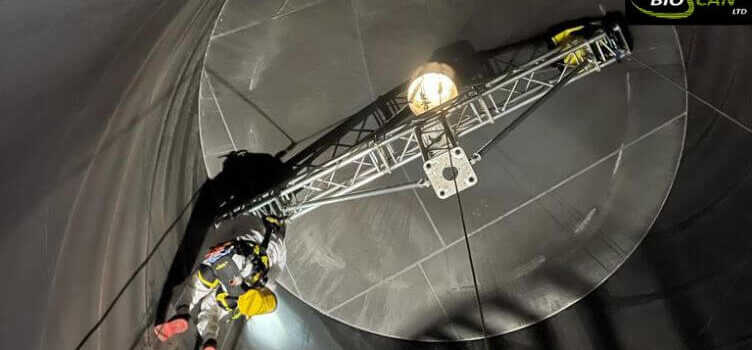
Defects and cracks can appear in spray drying chambers, owing to exposure from its working conditions, age, and temperature changes. Such defects and cracks can lead to the formation of microbial films wherein microbes thrive on organic remnants present in the cracks. As such, spray drying crack inspection, as the name suggests, pertains to the investigation of the efficacy, safety, and hygiene of spray dryers and spray drying chambers.

Therefore, the spray drying sector needs crack testing inspection services such as those offered at Bioscan.

Improve efficiency & enhance safety with our integrity inspection services!

Get a Quote

1. Detecting visual and non-visual defects using an electronic testing technology

It is a comprehensive inspection service for the periodic examination of spray dryers. The method is efficient, environmentally friendly, and does not require the useage of dyes or chemicals. Moreover, the electronic testing technology minimises production downtime and ensures that audit requirements are aptly met. Thus, it becomes possible to carry out a full dryer inspection within 24 to 48 hours, improving the efficacy of the spray drying plant.

2. Safety and Risk Prevention

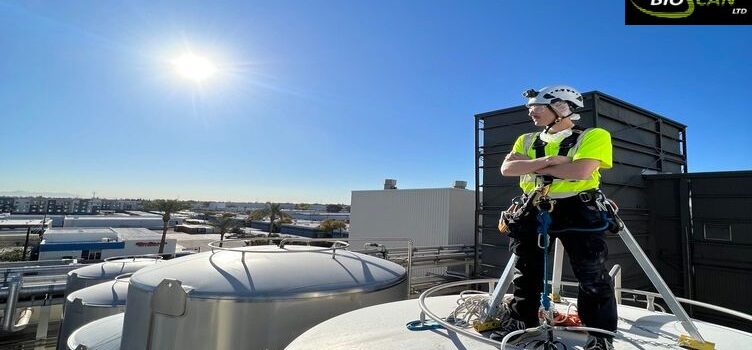
Another vital aspect of spray dryer crack testing is associated with the safety of the process. For instance, the personnel at Bioscan are trained and qualified, assuring that clients get the best-in-class professional services coupled with extensive knowledge and experience. The staff at Bioscan are specially trained to work at heights and within confined spaces and undergo refresher training in a timely fashion. Likewise, Bioscan is ISO 9001, and Safe Contractor certified, meaning that the organisation offers best-in-class support and security to its vast pool of clients.

Further Read: Bioscan’s Electronic Testing Technology For Spray Dryers Inspection

Wrapping It Up

In a nutshell, we can safely say that spray drying is an industry with global significance. In addition, we can only expect an increase in its influence. The rising prominence of spray drying technology ought to be backed by dependable spray drying crack testing mechanisms to ensure that the plant’s safety is prioritised. However, spray drying inspection companies must adhere to all applicable standards and customer-specific requirements to offer world-class services.

Bioscan is focused on making a veritable change within the spray drying sector by offering best in class testing services. With a portfolio of clients such as Abbott, Lactalis, DFA, Perrigo, Nestle, Mead Johnson, and many more, Bioscan has established themselves as a pioneering presence within the spray drying inspection industry.

Read More
Preventive Maintenance Inspection

Determining the Frequency of Preventative Maintenance Inspections

Reducing the frequency of preventative maintenance inspections of spray dryers and other vessels can often have a negative impact. Implementing a more frequent annual inspection routine gives companies numerous benefits such as;

Increased life span of assets, reduction of costs long term by discovering issues in their early stages, improves budgeting/planning strategies for major corrective actions, lowers overall operating costs, reduces cross contamination and product recall risks, increases productivity long term, improved reliability and customer confidence.

Get in touch today to schedule your preventative maintenance inspection!

Get in Touch

Case study

After completing a repeat inspection of a spray dryer for a client in January 2021, Bioscan’s findings resulted in the client facing major corrective actions. In total there was an area of 25cm x 3m in the upper chamber which required immediate attention. This area had developed severe stress corrosion cracking in the weld seams, which was unable to be repaired without the requirement of cutting out the parent metal and replacing it for new. The client had not planned for this amount of repair works to be performed during their 72-hour shutdown schedule.

Photos of the unrepairable stress corrosion defects found:

Unrepairable Stress Corrosion Defects

The client was now facing a lengthy shutdown period and extensive costs for the corrective actions. Costs that could have been either significantly reduced or eradicated altogether if a more frequent annual inspection programme had been implemented.

In addition, a further 50 cracks were identified in the 2021 inspection. During the previous inspection performed in 2016, a total of only 15 defects were found and repaired. Bioscan determined that as the client had decided upon an inspection frequency of 5 years for the spray dryer, the issues found in 2021 could have been resolved in their earlier stages or better planned for with an annual inspection.

This low-cost short term thinking towards inspections had led to very high costs and an increased shutdown to perform the required corrective actions, this in turn had a negative overall impact on the productivity of the plant.

To find out more about our services and experience, you can explore our website or reach out to us at sales@bioscanltd.co.uk

Read More
Detecting Hidden and Non Visual Defects

Detecting Hidden and Non-Visual Defects

All inspection methods (visual, cameras, robots, or dye) have their place in the food and beverage industry. But none are as effective at detecting hidden and non-visual defects as Bioscan’s electronic inspection technology.

A case study

In October 2020, Bioscan was contacted by a client who believed they had potential cross-contamination issues arising from a spray dryer. The client had already performed several internal visual and dye penetrant inspections to try and identify possible defects but were unsuccessful.

After setting up Bioscan’s access equipment, our expert inspection technicians began to locate areas of potential concern. They quickly established that in the lower cone of the spray dryer, there were many defects. These were faults that could only be identified by Bioscan’s electronic inspection device; they would not have been detected by visual, camera, robot, or dye penetrant methods.

The images below show two of the areas where Bioscan’s technicians discovered there was a serious concern, as audio and visual feedback from the electronic inspection device were consistent. However, no defects were currently visible to the eye, only the product residues covering the surface.

Get in touch today to schedule an electronic inspection!

Get in Touch

Hidden and Non-Visual Defects

In total there were around 5m² of areas with potential defects, both in the spray dryer’s weld seams and the sheet metal itself. After discussing the situation with the client, Bioscan’s team then lightly polished these areas to reveal the extent of the damage. The images below show the extremely porous corrosion pitting and cracking, and the likely cause of the client’s cross-contamination issues.

Extremely Porous Corrosion Pitting and Cracking Detected

Below are some microscopic images of these areas, to show the client the product residues building up inside the defects during production cycles.

Microscopic Images of Non-Visual Defects

Due to the extent of the damage that the corrosion pitting and cracking had caused to the parent material of the stainless steel, these areas were unrepairable. But the client now had the knowledge of where the likely cause of the cross-contamination was coming from and could plan ahead for the corrective actions.

Without Bioscan’s expertise and electronic inspection technology offering the ability to locate these hidden, non-visual defects beneath the surface of the product residues, the client would have continued to run the risk of producing their food products in unsafe conditions.

To find out more about our services and experience, you can explore our website or reach out to us at sales@bioscanltd.co.uk

Read More